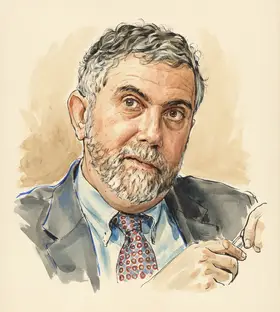
Paul Krugman on Modern Monetary Theory
TL;DR
Paul Krugman views Modern Monetary Theory as substantially flawed, equating it with functional finance but finding its conclusions dangerous and poorly articulated.
Key Points
He characterized his debates with MMT advocates as a game of "Calvinball" due to perceived shifting rules and unclear definitions.
He argued that while MMT resembles Abba Lerner’s functional finance, it fails to fully address the political difficulties of raising taxes or cutting spending to manage high debt ratios.
He contended in February 2019 that the conventional view, where budget deficits lead to higher interest rates that crowd out private spending, applies when not in a liquidity trap.
Summary
Paul Krugman maintains a strongly critical stance on Modern Monetary Theory, often framing it as largely equivalent to Abba Lerner's 1943 'functional finance' doctrine, which he believes is incomplete. His primary objection centers on the theory's alleged neglect of the tradeoff between fiscal and monetary policy, arguing that budget deficits, contrary to MMT claims, do crowd out private spending through higher interest rates unless the central bank intervenes. He criticizes MMT for being cavalier regarding monetary policy's role in inflation control, believing that MMT proponents fail to adequately address the political and technical limitations associated with raising taxes or cutting spending to control debt sustainability if interest rates exceed growth rates.
He further suggests that engaging with modern MMT proponents can be like playing 'Calvinball' due to perceived shifting definitions and dismissiveness towards critiques, making substantive debate difficult. While acknowledging MMT's intellectual debt to certain Keynesian ideas and agreeing that deficits matter less in a liquidity trap, his overall position emphasizes the non-negotiable constraints of inflation and the political difficulties of fiscal correction when debt becomes high. He argues that even well-intentioned progressive programs require offsetting revenue, irrespective of MMT's theoretical dismissal of debt constraints.
Key Quotes
Paul Krugman compared debating MMTers to playing Calvinball — a reference to the game played in the Calvin and Hobbes comic series in which the players constantly change the rules in transparently self-serving ways.
Sorry, but this is just a mess. Kelton's response misrepresents standard macroeconomics, my own views, the effects of interest rates, and the process of money creation.
Frequently Asked Questions
Paul Krugman is a strong critic of Modern Monetary Theory (MMT). He generally views it as flawed, often comparing it to Abba Lerner's functional finance but finding its implications regarding debt and inflation dangerous.
His critique has been consistent since his initial detailed engagement around 2019, focusing on the alleged neglect of fiscal-monetary tradeoffs and political constraints. He appears to view the core theoretical differences as persistent obstacles.
Paul Krugman argues that budget deficits, outside of a liquidity trap, cause interest rates to rise, thereby crowding out private investment. He rejects the MMT premise that fiscal policy can always be substituted for monetary policy without consequence.
Sources5
Paul Krugman Asked Me About Modern Monetary Theory. Here Are 4 Answers.
The Weakness of Modern Monetary Theory | National Affairs
Paul Krugman's criticism of MMT : r/mmt_economics
What's Wrong With Functional Finance? (Wonkish)
Right becomes Left for Paul Krugman – William Mitchell – Modern Monetary Theory
* This is not an exhaustive list of sources.