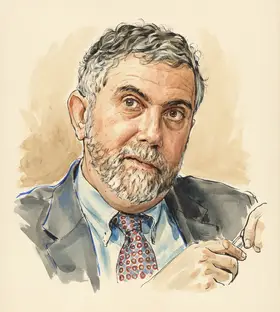
Paul Krugman on Brexit
TL;DR
Paul Krugman strongly argued that leaving the European Union would inevitably make Britain poorer due to substantial negative economic consequences.
Key Points
He rejected assertions by Brexiteers that leaving the single market and customs union would ultimately benefit the UK's exports as of September 2017.
He viewed the internal damage to the UK resulting from policy malfeasance as a greater additional harm than the underlying political troubles in Europe.
He stated that the fall in the pound was not a world-class shock, though he still foresaw long-term negative impacts from reduced trade and investment.
Summary
Paul Krugman consistently maintained a critical stance on Brexit, asserting from the immediate aftermath that leaving the EU would make Britain poorer, primarily due to the substantial negative trade effects that would erode productivity over time. He acknowledged the discussion about short-run financial repercussions but focused more on the damage to the UK itself, which he believed was directly caused by the political decision-making surrounding the referendum. He also pointed to the immediate impact of uncertainty depressing investment, a key economic factor.
While initially finding himself less horrified by predictions of an immediate, world-class macroeconomic shock than some others, the long-term implications for trade and investment were central to his opposition. He expressed worries about the future of the European project itself, seeing Brexit as bringing to a head an underlying abscess in the continent's structure. Furthermore, he highlighted that assurances of market access, which Brexit revoked, are crucial for encouraging long-term, cross-border investments.
Frequently Asked Questions
Paul Krugman's main position is that Brexit is an economically damaging event for the United Kingdom. He consistently argued that leaving the European Union would lead to a substantial economic price due to negative effects on trade and investment.
The economist was less convinced of an immediate, world-class recession following the vote, focusing more on the certainty of long-term economic harm. He suggested that the short-run macroeconomic fallout would be less severe than some feared, while still worrying about investment uncertainty.
He reserved significant condemnation for political figures like David Cameron and certain tabloid editors for feeding the public lies that led to the vote. He focused his criticism on the policy malfeasance that damaged the UK internally, rather than on the broader European context.
Sources4
Independent: Brexit: 'Zero chance' leaving EU will make Britons better off, Nobel laureate economist Paul Krugman says
Must-Read: Paul Krugman: Brexit: The Morning After - Equitable Growth
Paul Krugman, Brexit, and Bubbles – CEPR
Paul Krugman on Brexit and falling investment - Marginal Revolution
* This is not an exhaustive list of sources.