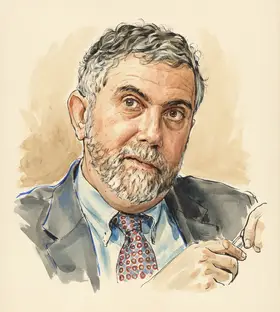
Paul Krugman on Billionaires
TL;DR
Paul Krugman views the rise of billionaires as symptomatic of rising inequality and a political distortion of the economy.
Key Points
He characterized the very rich, in 2019, as a 'pathetic billionaires club' whose wealth often results from luck and political influence.
He has argued that the rise of massive fortunes reflects an economy where rents, rather than productivity, are the primary driver of income gains.
His position is that these fortunes distort democracy by giving the ultra-rich outsized political power to protect their economic position.
Summary
Paul Krugman views the existence and proliferation of billionaires as a clear indicator of severe, damaging economic inequality, often driven by rents rather than productive creation. He frequently points to the concentration of wealth as evidence that the economic system is misallocating resources and rewards, favoring those who extract wealth or benefit from monopoly power over those who generate broad economic growth. For him, the sheer scale of these fortunes signals a failure in the distribution of economic gains, moving away from the post-war consensus that favored broad middle-class prosperity.
His analysis often connects the power of the ultra-rich to political influence, suggesting that such extreme concentrations of wealth enable them to shape policy, media narratives, and even democracy itself to protect their status. He has linked the term 'oligarchs' to this class, noting that while not all wealthy individuals are inherently bad, the creation of these massive fortunes often reflects an economy that is increasingly 'enshittifying' for the average consumer or worker. The concern is less about the wealth itself and more about what its creation implies for the overall health and fairness of the market system.
Key Quotes
In other words, because buying political influence is expensive, we would expect that the growing concentration of wealth *within* the plutocrat class will increase that class’s political spending and, therefore, its power.
Anyway, what's interesting is just how thin-skinned these people are.
Frequently Asked Questions
Paul Krugman views the concentration of wealth into billionaire fortunes as a strong signal of a fundamentally unequal and, in many ways, broken economic system. He believes these fortunes often reflect success in extracting rents or exploiting market power rather than creating broad new value.
The core of Paul Krugman's stance—that extreme wealth concentration signals economic trouble—appears consistent, though his commentary evolves with current events. He frames the modern billionaire as a newer, more politically potent phenomenon than in previous eras.
Paul Krugman has frequently expressed concern over the political influence wielded by billionaires, suggesting their wealth allows them to shape policies that further entrench their economic advantage. He links their rise to a broader political problem concerning oligarchy.
Sources8
Billionaires gone wild
Oligarchs and the Rise of Mega-Fortunes | Paul Krugman: Understanding Inequality, Part IV
Opinion | Where Will the Next Billionaires Come From?
Resist catastrophe: Paul Krugman, Ari Melber on MAGA billionaires buying media, tech, democracy
America’s ‘Thin-Skinned Billionaires’ Are Not Heroes
* This is not an exhaustive list of sources.