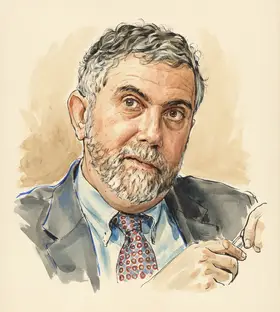
Paul Krugman
- Known for
- New Trade Theory, New Economic Geography, Nobel laureate
- Born in
- Albany, United States
- Education
- PhD in economics, City University of New York
Paul Krugman is a Nobel laureate economist and highly influential commentator, known for his work on New Trade Theory and New Economic Geography. Identifying as a modern liberal, his career spans rigorous academia, policy advising (including a stint in the Reagan administration), and high-profile New York Times columnism, culminating in his move to Substack.
Signature Positions
Krugman's views span academic theory and contemporary political economics:
- Macroeconomics: Advocates Keynesian economics and aggressive fiscal stimulus, especially during liquidity traps, arguing against austerity during downturns.
- Trade: Generally supports free trade and globalization, though he acknowledges its complex effects on inequality and has entertained tariffs as retaliation for currency manipulation.
- Inequality: Argues that rising income inequality is largely due to policy choices, specifically criticizing tax cuts benefiting the wealthy.
- Fiscal Policy: Strongly advocates government spending on social and infrastructure programs, framing these as necessary investments.
- Technology: Critical of Bitcoin as an economic bubble and warns that Artificial Intelligence may displace many knowledge jobs in the short term.
How Views Have Evolved
Krugman's positions on trade and immigration have evolved significantly over his career.
He has shifted from staunch support of free trade, viewing it as a "rule of thumb," to a more nuanced view, admitting that globalization models underestimated impacts on jobs and inequality in developed nations.
Similarly, his stance on immigration shifted from concern over wage suppression for low-skill workers to acknowledging that immigrants often take different jobs, leading to beneficial wage growth at the bottom.
Notable Tensions
Krugman’s career has generated significant controversy and criticism:
- Partisanship vs. Objectivity: Critics accuse him of relentless partisanship, particularly against the Bush administration, and sometimes selectively citing data to support his arguments.
- Policy Pragmatism: His early career suggested a willingness to support market mechanisms (e.g., opposing rent control), contrasting with his later strong advocacy for large-scale Keynesian stimulus.
- Trump Criticism: His vocal criticism of Donald Trump led to him receiving a 'Fake News Award,' highlighting his polarizing role in contemporary political commentary.
Awarded the Nobel Prize in 2008 for his pioneering work in New Trade Theory and New Economic Geography, Krugman is consistently ranked as one of the world's most influential economists. His public commentary, particularly through his New York Times column, has made him arguably the most recognizable, and polarizing, liberal economic voice in American public discourse.