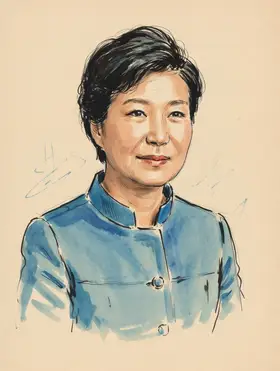
Park Geun Hye on Japan
TL;DR
Park Geun Hye demanded Japan acknowledge historical wrongs as a prerequisite for sound, future-oriented bilateral relations.
Key Points
She called upon Japanese leaders to take proactive measures on the comfort women issue while survivors were still alive as of 2014.
Park stated that properly resolving history issues was essential for developing the bilateral relationship on a sounder basis as of June 2015.
Her firm stance against Japan was partially a reaction to domestic political dynamics, which linked her to her father's perceived pro-Japanese leanings.
Summary
Park Geun Hye's core position regarding Japan was anchored in the necessity of Japan taking a "correct view of history," particularly concerning the comfort women issue, before relations could progress soundly. She frequently called upon Japanese leadership to take proactive measures acceptable to the victims while they were still alive, viewing this historical reckoning as the essential prerequisite for moving toward future-oriented, friendly, and cooperative ties. This stance was evident in her statements on significant anniversaries, where she reiterated this condition for normalized relations, even while acknowledging the importance of the bilateral relationship for regional stability.
Her strong emphasis on historical issues was also influenced by domestic political constraints; critics suggested she needed to actively distance herself from any perception of being pro-Japanese due to her father's past ties with imperial Japan. While holding this firm line, she recognized the strategic value of better relations, especially in the context of U.S. alliances and regional security against North Korea, suggesting a pragmatic desire to improve ties once the historical burdens were addressed. This created a delicate balance where forward-looking cooperation was desired but explicitly conditioned on accountability for the past.
Frequently Asked Questions
Park Geun Hye's main demand was for the Japanese government to take a 'correct view of history.' This primarily centered on acknowledging past wartime wrongs, especially regarding the comfort women issue, and offering acceptable measures to the victims.
Yes, she expressed the need to start making progress toward future-oriented, friendly, and cooperative relations with Japan. However, she made clear that sound progress was conditional upon Japan's sincere handling of historical issues.
The relationship was strained, and Park Geun Hye refused to hold bilateral meetings with her Japanese counterpart, Prime Minister Shinzo Abe, until the historical issues were resolved to South Korea's satisfaction. Such meetings were often brokered only with U.S. mediation.
Sources7
Japan and the Korean Peninsula: A Regional “Two-Level Game”
Park Geun-hye's “Correct View of History” With Japan
Why history is a problem for Park Geun-hye in confronting Japan
Order at risk: Japan, Korea, and the Northeast Asian paradox
Resolving history issues is key to a better relationship: president
The Japan-South Korea 'Comfort Women' Agreement Survives (Barely)
How to help Korea-Japan rapprochement endure
* This is not an exhaustive list of sources.