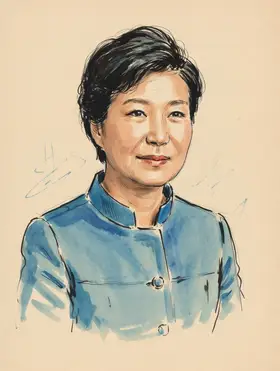
Park Geun Hye on Feminism
TL;DR
Park Geun Hye's presidency offered a mixed record on women's substantive representation despite her historic status as the first female president.
Key Points
She nominated few women to high-profile political posts during her cabinet appointments, contradicting her campaign pledge to select women for important governmental roles in 2013.
Her government expanded the budget and scope of the Ministry of Gender Equality and Family (MGE) compared to the preceding conservative administration.
Park's campaign proposed policies for women, including shortening working hours for pregnant employees and offering maternity and parental leave.
Summary
Park Geun Hye’s election in 2013 as South Korea's first female president symbolized a turning point for women in politics, yet her actual performance regarding substantive representation of women's interests was characterized as mixed. Her conservative party affiliation led to expectations that she might neglect gender equality policies, but her government expanded some women-related policy areas previously established by progressive administrations, offering some policy benefits over the preceding conservative government. However, her record was uneven, showing both expansion of some progressive areas and policy silences on others, such as abortion.
Despite championing women-related policies during her campaign, such as improvements to parental leave and daycare, Park drew heavy criticism for nominating few women to high-profile political posts, contrary to her pledges. This led some observers to label her tenure as a "woman presidency without women." Her approach focused on a reactionary neoliberalism with a populist, feminist face, which is argued to have enforced repression of the majority of women by fostering the advancement of only a small percentage of elite women.
Frequently Asked Questions
Park Geun Hye's position was manifested through her administration's policy record, which was seen as mixed in terms of substantive representation for women. While she expanded some women-related policy areas, she was criticized for a lack of women in top political posts. Her approach was viewed by some as 'femininity without feminism,' focusing on elite women's advancement rather than broader feminist concerns.
Park Geun Hye's government implemented and expanded upon certain women-related policies inherited from previous administrations, particularly in areas like daycare programs and parental leave. However, her overall commitment was considered mixed, as she did not consistently pursue gender equity across all areas, leading to criticism that her presidency was a "woman presidency without women."
Her presidency, as the first female leader, was initially heralded as a symbolic step forward for South Korean women in a patriarchal society. However, her later downfall due to a corruption scandal reportedly led to concerns that her removal would be used to argue that women are unfit for high office, potentially increasing resistance to female leaders.
Sources8
Women's Movement in South Korea: How to Break the Structural Oppression
President Park Geun-Hye of South Korea: A Woman President without Women?
The future of South Korea's feminist movement
“Femininity without Feminism”: Korea's First Woman President and Her Political Leadership
Being Bold For Change: South Korea's Online Feminist Movement
The Empowerment of Women in South Korea | Columbia | Journal of International Affairs
Feminism in Korea | Asian Perceptions of Beauty and Gender in the Media
The Plight of Gender Inequality in South Korea | Inkstick
* This is not an exhaustive list of sources.