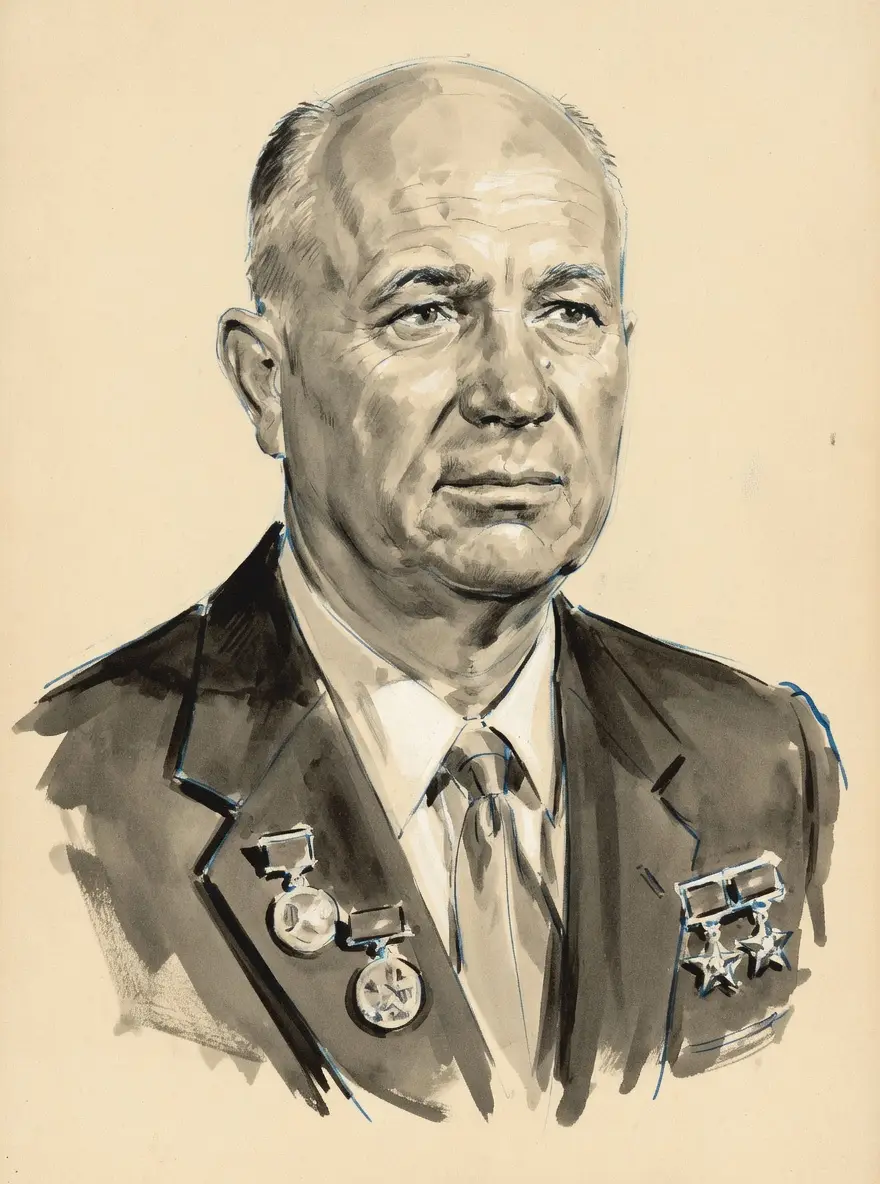
Nikita Khrushchev on John F. Kennedy
TL;DR
Khrushchev initially viewed Kennedy as young and weak, but mutual crisis management fostered cautious, pragmatic respect.
Key Points
The premier considered Kennedy to be very inexperienced and immature during their June 1961 summit in Vienna.
During the Cuban Missile Crisis in October 1962, both leaders engaged in secret correspondence that ultimately averted nuclear war.
Khrushchev expressed appreciation for Kennedy's agreement to confidentially resolve the issue of U.S. missile bases in Turkey.
Following the crisis, Khrushchev saw a shared commitment with Kennedy to preserve peace on earth despite ideological differences.
Summary
Nikita Khrushchev's initial assessment of John F. Kennedy was largely negative, viewing the American president as inexperienced and immature following the Bay of Pigs invasion, suggesting Kennedy "savaged" him during their June 1961 Vienna summit and that he was a pushover compared to his predecessor. This perception, however, underwent a significant shift during the intense standoff of the Cuban Missile Crisis in October 1962. During this 13-day confrontation, both leaders demonstrated a willingness to communicate secretly and seek a resolution to avoid nuclear war, which led to a more practical, albeit adversarial, respect between the two.
Following the crisis, the Soviet premier expressed satisfaction with the resolution, acknowledging the President's demonstration of responsibility to maintain peace, even while privately noting the exchange involved a secret quid pro quo regarding U.S. missiles in Turkey. Khrushchev noted that he and Kennedy shared a common goal: preserving peace on earth, suggesting that despite ideological differences, they could conduct essential business. The relationship, though defined by confrontation, ultimately evolved into one where both recognized the necessity of restraint, a crucial element for managing the Cold War's most dangerous flashpoints.
Key Quotes
“In the next war the survivors will envy the dead.”
"We're going forward. You press us, that's your problem."
Frequently Asked Questions
Initially, Nikita Khrushchev did not hold much respect for John F. Kennedy, viewing him as young and inexperienced, particularly after the Bay of Pigs failure. This perception was severely tested during the Cuban Missile Crisis, where the shared experience of nearing nuclear conflict established a foundation of cautious, pragmatic respect between the leaders.
The Cuban Missile Crisis appeared to change the Soviet premier's view by confirming that President Kennedy was a responsible leader capable of intense crisis management. While Kennedy was initially seen as a pushover, his handling of the standoff led Khrushchev to acknowledge their shared goal of preventing global war.
Khrushchev's initial impression was very negative; he reportedly told his interpreter that Kennedy was 'very inexperienced, even immature,' especially compared to Eisenhower. This view was largely based on Kennedy's perceived handling of the Bay of Pigs invasion just prior to their first meeting.
Sources6
How My Father and President Kennedy Saved The World
Did Nikita Khrushchev like or respect President Kennedy? : r/JFK
Kennedy Meets Khrushchev | American Experience | Official Site | PBS
The Kremlin, Letter from Nikita Khrushchev to John F. Kennedy Confirming Missile Crisis Quid Pro Quo Agreement, October 28, 1962 | National Security Archive
JFK Was Completely Unprepared For His Summit with Khrushchev | HISTORY
Nikita S. Khrushchev;John F. Kennedy | HistoryNet
* This is not an exhaustive list of sources.