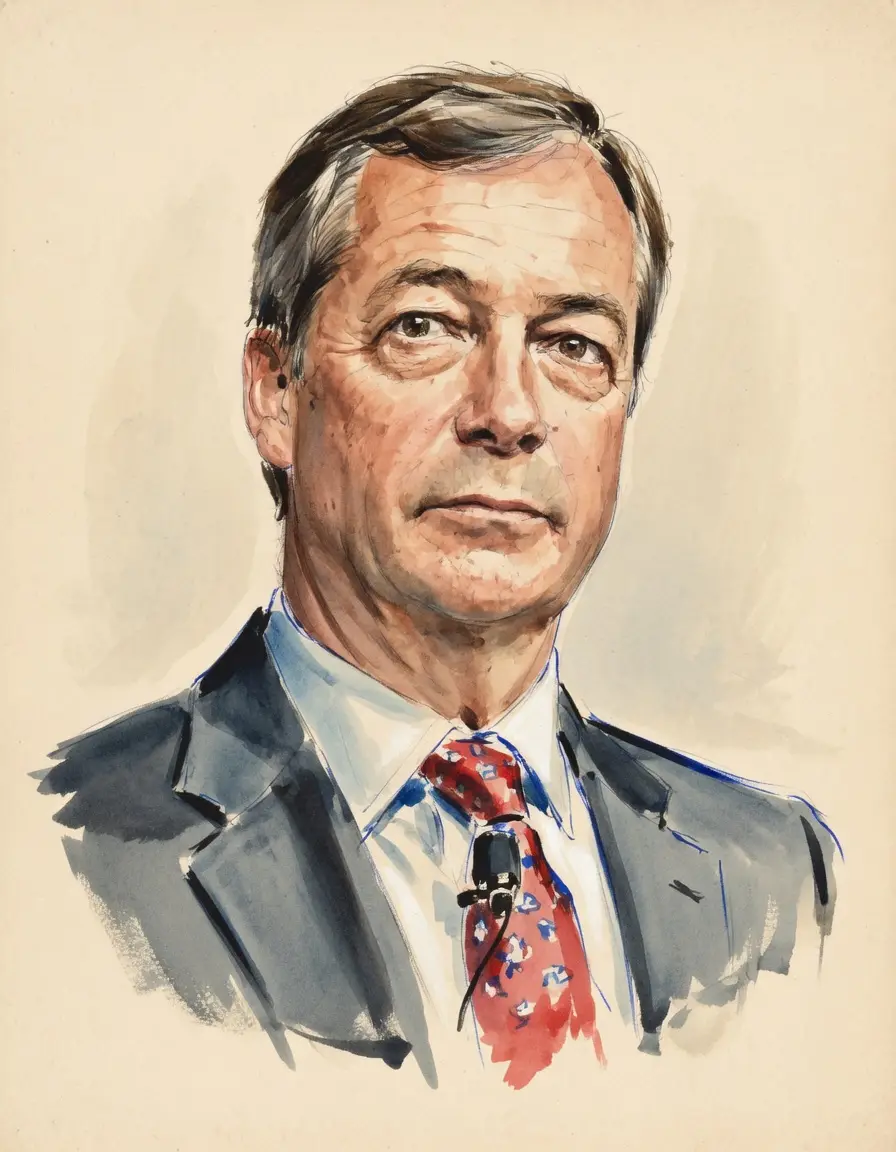
Nigel Farage on North Atlantic Treaty Organization (NATO)
TL;DR
Nigel Farage strongly criticizes NATO expansion, arguing it provoked Russia's war in Ukraine, preferring national interests over collective defense.
Key Points
He stated that Russia's invasion of Ukraine was "provoked" by the eastward expansion of NATO and the EU.
He has advocated that the West should stop challenging NATO's agenda and pursue peace talks with Russia to end the conflict in Ukraine.
His perspective is that the needs of the British people must take precedence over financing foreign conflicts to support the US and NATO agenda.
Summary
Nigel Farage's position on the North Atlantic Treaty Organization is characterized by a strong critique of its post-Cold War expansion, particularly regarding Eastern Europe. He has asserted that the eastward expansion of NATO provoked Russia's war in Ukraine, giving the Russian president a reason to claim encirclement by hostile forces. This stance puts him at odds with the mainstream political consensus in the UK and among NATO allies, who generally view the alliance as defensive. Farage has openly stated that Russia's invasion was provoked by this expansion and has advocated for peace talks with Russia, implying a need to de-escalate tensions stemming from NATO's actions.
This view aligns with his broader Eurosceptic and populist foreign policy outlook, which prioritizes UK national interests over commitments to multinational security structures perceived as drawing the country into foreign conflicts. While he has recently backed Ukraine's NATO aspirations, his more consistent historical stance, shared by some US counterparts, has been to question the aggressive strategy of the alliance. He suggests that the needs of the British people must come before financing conflicts abroad to satisfy NATO or US agendas.
Frequently Asked Questions
Nigel Farage's primary criticism revolves around the alliance's eastward expansion since the Cold War. He contends that this expansion directly provoked Russia, providing the Kremlin with justification for its military actions in Ukraine. He views this expansion as an aggressive strategy rather than a purely defensive one.
While Nigel Farage has recently backed Ukraine's NATO aspirations, his more foundational position remains critical of the alliance's role in escalating tensions with Russia. His past statements strongly suggested that NATO expansion was the root cause of the conflict, indicating a complex, though consistently critical, overall view.
Nigel Farage explicitly stated that Russia's invasion of Ukraine was 'provoked' by the post-Cold War enlargement of NATO into Eastern Europe. He argued that this expansion created an existential security fear for Russia, which he believes precipitated the conflict.
Sources6
West provoked Russia-Ukraine war, says UK's Nigel Farage
UK Lawmaker Reacts to Trump Suggesting US Could Join British Commonwealth
Does Reform UK have a foreign policy? | Chatham House – International Affairs Think Tank
UK election: Farage provides a new and safer direction
An Unnecessary War of Fame: The East and West NATO's Enlargement Strategies and the Geopolitics of Russo- Ukrainian Conflict
Brexit Hangover: How Populism Continues to Shape Britain's Politics and Foreign Policy — International Relations Review
* This is not an exhaustive list of sources.