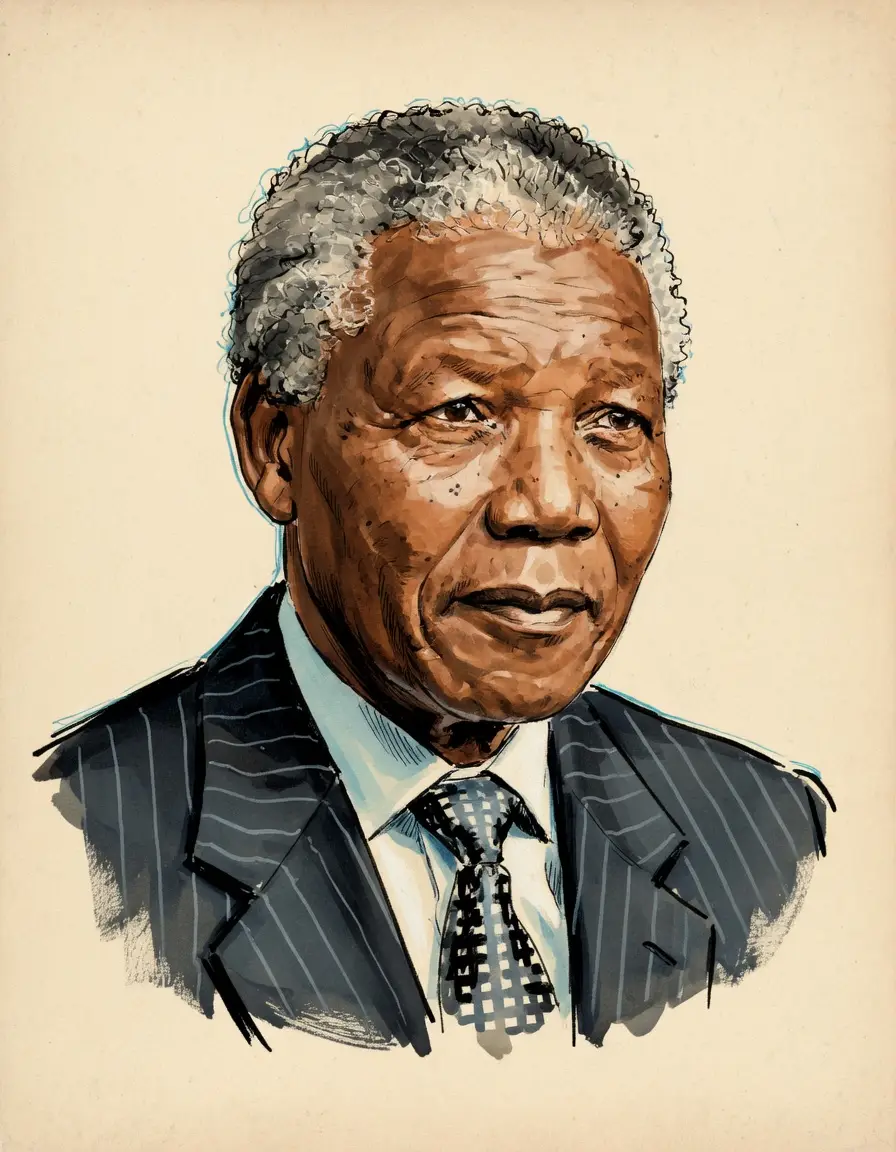
Nelson Mandela on United States
TL;DR
Nelson Mandela expressed strong critiques of United States foreign policy, particularly regarding imperialism and past atrocities, while also acknowledging its support.
Key Points
He addressed a joint session of the United States Congress on June 26, 1990, urging the continuation of sanctions until South Africa's transformation was irreversible.
In an undated video, the leader accused the United States of global arrogance and committing "unspeakable atrocities," referencing the atomic bombings.
He spoke at the Brookings Institution in May 2005 regarding the critical role of the United States in providing aid and development efforts for Africa.
Summary
Nelson Mandela, the former President of South Africa, held a complex and critical view of the United States, particularly concerning its foreign policy and global conduct. In resurfaced footage, he delivered one of his most pointed critiques, accusing the nation of global arrogance and violence, and stating that it has committed "unspeakable atrocities in the world," referencing the atomic bombings of Hiroshima and Nagasaki as demonstrations of power rather than necessities to end the war. This critical stance often focused on perceived American imperialism and disregard for human life on the global stage, challenging Washington's role as a world policeman.
However, his relationship also involved appreciation for American support during the anti-apartheid struggle, which was crucial to the transformation of South Africa. When addressing the United States Congress in 1990, he called for the maintenance of sanctions until fundamental, irreversible change was achieved in his country, while also acknowledging the international community's support. Furthermore, he engaged with American institutions, as evidenced by his 2005 remarks at the Brookings Institution, where he discussed the vital role of the United States in aid and development efforts for Africa, suggesting a pragmatic approach to seeking necessary support for the continent's progress.
Frequently Asked Questions
Nelson Mandela offered severe criticism of United States foreign policy, particularly accusing the nation of global arrogance and violence in an undated video address. He challenged the country's role as a world policeman and referenced historical actions he deemed to be atrocities. However, his engagement was also pragmatic, seeking support for development.
The available information suggests a consistent, albeit nuanced, critical position from Nelson Mandela. While he strongly condemned perceived US imperialism and violence, he simultaneously engaged constructively with the US government and institutions, such as when seeking aid for Africa. This suggests a change in engagement rather than a fundamental shift in critique.
Yes, Nelson Mandela acknowledged international support, including from the United States, for the anti-apartheid movement. When receiving an honorary degree in 1993, he framed the accolade as a tribute to the struggle, which had found an echo in every part of the world. He also engaged with US leaders and institutions to secure developmental aid.
Sources9
A resurfaced video sees the late Nelson Mandela blasting ...
Retro: Old Nelson Mandela's video reignites debate on US imperialism and global bullying
Nelson Mandela's Ambivalent View of the United States
Mandela in America - MacArthur Foundation
Africa's Time Has Come: Nelson Mandela on the Role of the United States in Aid and Development Efforts
Nelson Mandela Addresses a Joint Session of the United States Congress (1990)
A resurfaced video sees the late Nelson Mandela blasting US ...
Acceptance address by Nelson Mandela at the Clark University Investiture, Atlanta, Georgia - United States
Nelson Mandela talking talking about what the US did to Hiroshima
* This is not an exhaustive list of sources.