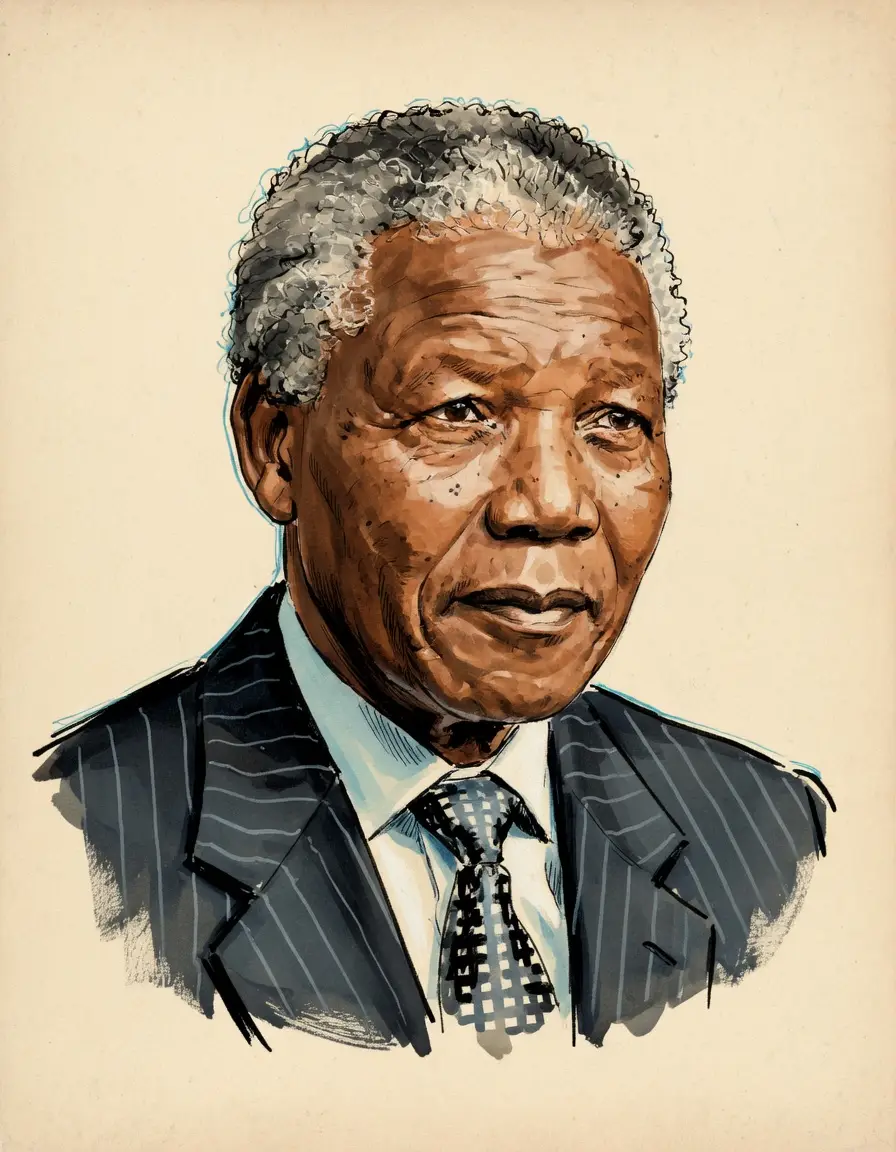
Nelson Mandela on Religion
TL;DR
Nelson Mandela affirmed the vital, positive role of religious institutions in South Africa's liberation and nation-building efforts.
Key Points
He praised the contribution of South African Muslims to the struggle against apartheid and to building a just state based on equality in 1997.
He addressed the Parliament of World's Religions in Cape Town in December, stating he changed his itinerary to attend the gathering.
He believed that one cannot truly love God without loving all human beings, emphasizing shared responsibility for all humanity.
Summary
Nelson Mandela consistently spoke positively about the role of religion and religious institutions, viewing them as crucial forces for social good, particularly in the fight against apartheid. He credited the education and moral teachings received from missionary schools, largely run by the Methodist Church, as foundational to his values. During his imprisonment, religious organizations across various faiths provided essential pastoral care and hope, which he stated kept the political prisoners connected to the outside world and inspired them to continue. He maintained that faith leaders must remain at the forefront of national reconstruction and delivering a better life for all South Africans, drawing on their spiritual resources to address societal ills like alienation and inequality.
His personal faith was strongly rooted in his upbringing within the Methodist tradition, although he deliberately cultivated an approach of interfaith respect, studying Islam while imprisoned and later engaging with leaders from Christianity, Islam, Judaism, and Hinduism as president. Mandela advocated for a secular state that respects the freedom and role of all belief systems without giving any single religion preferential status in law. This balanced perspective allowed him to value his own Christian humanism while championing religious freedom, ensuring his efforts towards reconciliation were seen as grounded in shared humanity rather than sectarian dogma.
Key Quotes
"No one is born hating another person because of the colour of his skin, or his background, or his religion. People must learn to hate, and if they can learn to hate, they can be taught to love, for love comes more naturally to the human heart than its opposite."
Frequently Asked Questions
Nelson Mandela maintained a strong association with the Methodist Church of Southern Africa, citing its role in his education and offering pastoral care during his imprisonment. However, as president, he deliberately engaged across faiths, respecting Judaism, Christianity, and Islam as vital parts of the community.
Yes, Nelson Mandela firmly supported religious freedom as a universal human right. He argued for a secular state that recognizes and respects all belief systems without giving any one a preferential legal status.
Mandela's Christian humanism and African culture deeply informed his personal values like reconciliation and forgiveness, which were central to his political leadership. He saw religion as a force for commanding morality and was careful to keep the state separate from any single religious agenda.
Sources7
Nelson Mandela Foundation on religion, Zionism, and human rights – Nelson Mandela Foundation
Mandela hails Islam's role in Africa's construction, liberation
Mandela praises role of religion - Anglican Journal
Mandela: Methodist-shaped, Mandela praised roles of religion
Nelson Mandela and his faith - Christian Today
Mandela and the Methodists: Faith, fallacy and fact - SciELO
Nelson Mandela interview with John Battersby of the Christian Science Monitor
* This is not an exhaustive list of sources.