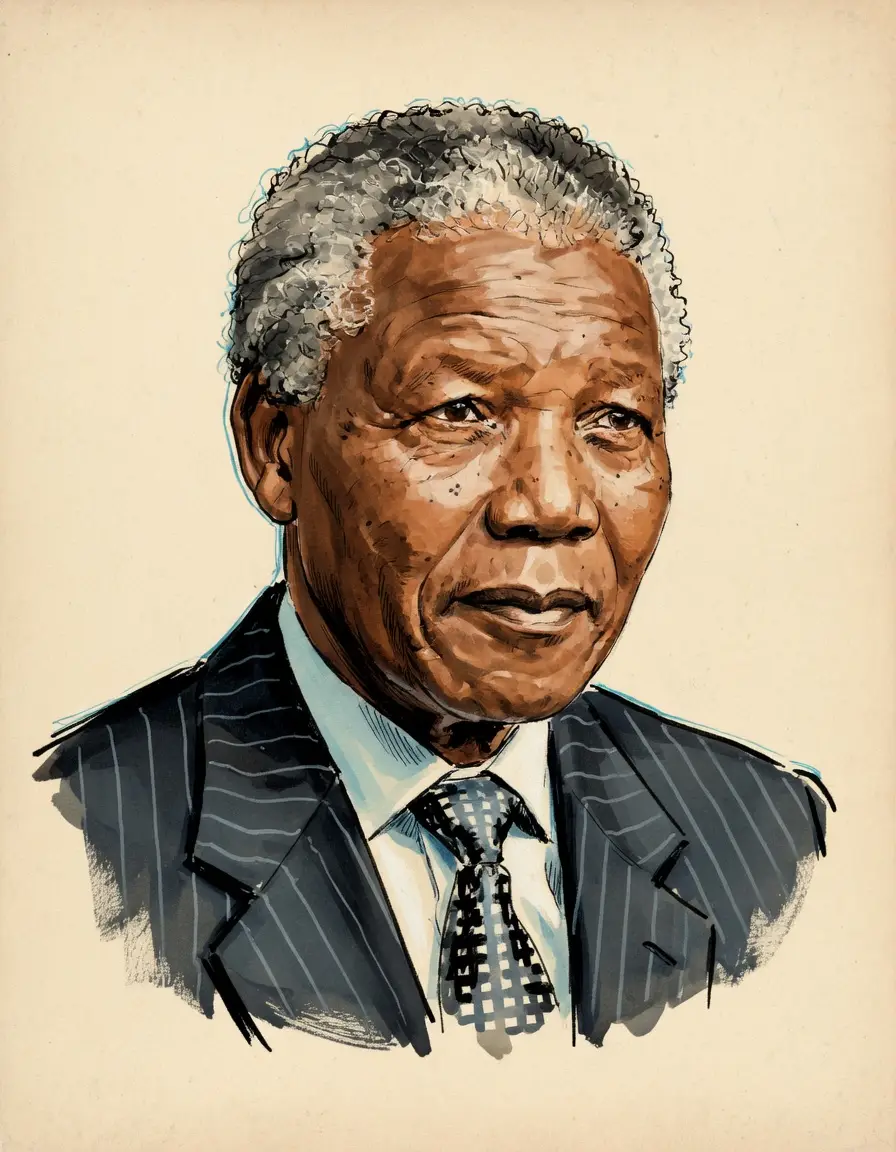
Nelson Mandela on Human Rights
TL;DR
Nelson Mandela viewed the protection of human rights for all people as the essential foundation for a just and peaceful global society.
Key Points
He cherished the ideal of a democratic and free society where all persons live together in harmony with equal opportunities, an ideal for which he was prepared to die, as stated in 1964.
He addressed the 53rd UN General Assembly in 1998, noting that the Universal Declaration of Human Rights vindicated the justice of the anti-apartheid cause and challenged him to dedicate his achieved freedom to its implementation.
He asserted in 2005 that overcoming poverty is not charity but an act of justice and the protection of the fundamental human right to dignity and a decent life, emphasizing that true freedom requires its eradication.
Summary
Nelson Mandela passionately articulated that the core of his lifelong struggle was the achievement of a democratic and free society where all individuals coexist in harmony with equal opportunities. He considered the fight against oppression, such as apartheid, as a direct defense of human dignity, stating that to deny someone their rights is to challenge their very humanity. His efforts, and subsequent leadership, were dedicated to dismantling systemic injustices and building institutions rooted in the principles of the Universal Declaration of Human Rights.
His perspective evolved from fighting racist domination to a broader global commitment, linking fundamental rights directly to combating poverty and inequality, which he deemed acts of justice rather than charity. Even after achieving freedom and becoming president, he maintained that the journey toward realizing a world without suffering, denial of freedom, or stripped dignity was incomplete, making constant vigilance and action necessary for leaders worldwide.
Frequently Asked Questions
Nelson Mandela's fundamental view was that human rights are universal and non-negotiable; he considered the denial of these rights to be a challenge to the very humanity of the oppressed. He dedicated his life to dismantling systems like apartheid that violated these principles in favor of equality and dignity for all.
The former South African President viewed the Universal Declaration of Human Rights as a vindication of his people's struggle against apartheid. He believed this historic document set the necessary foundation upon which the future political and social order of a new South Africa should be based.
Yes, he strongly linked human rights to economic justice, stating that overcoming poverty is an act of justice and a protection of the fundamental right to dignity. He maintained that as long as gross inequality and poverty persist, no one can truly rest, as such conditions preclude true freedom.
Sources8
Nelson Mandela: An Inspiration to All Who Struggle for Human Rights
Nelson Mandela's Life & His Statements Speaking Out For Justice
As Nelson Mandela knew deeply, there is no fair future without human rights for all
Nelson Mandela, Nobel Peace Prize, South African President : Youth For Human Rights Champion
Nelson Mandela once said, "To deny any person their human rights ...
Mandela: an exemplary citizen with a steadfast belief in human rights | OHCHR
12 Inspiring Quotes from Nelson Mandela | Human Rights Careers
#InContext: Nelson Mandela
* This is not an exhaustive list of sources.