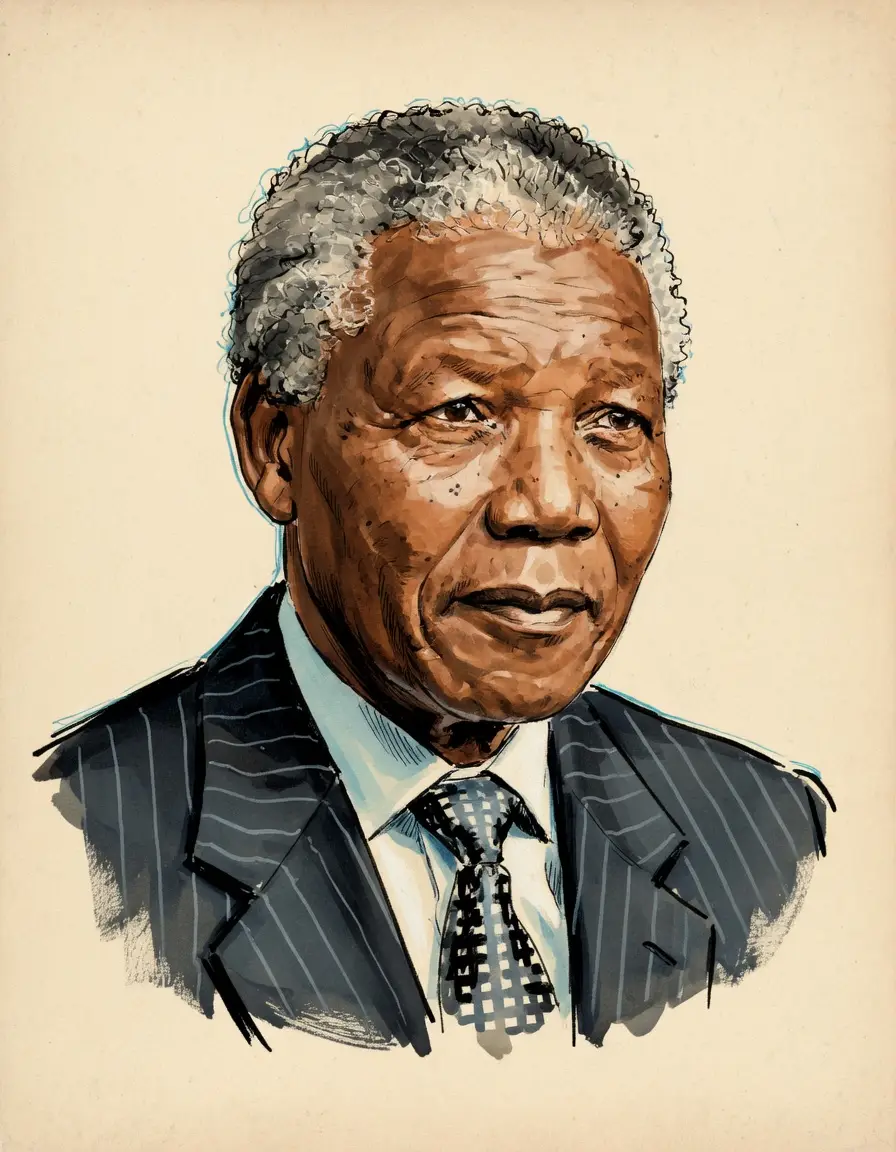
Nelson Mandela on Change
TL;DR
Nelson Mandela believed profound societal change requires relentless dedication, collective action, and the courage to conquer fear and bitterness.
Key Points
He viewed education as the most powerful weapon available to change the world, linking it to overcoming poverty.
The building of a new country requires rolling up its sleeves in partnerships for change, as stated in a 1999 address.
He recognized that enduring change, like peace, is not just the absence of conflict but the creation of an environment where all can flourish.
Summary
Nelson Mandela championed change as a necessary, powerful force, exemplified by his life's work in dismantling apartheid and building a democratic South Africa. He articulated that one never truly finishes the process of change, stating that after achieving one significant milestone, there are always "many more hills to climb" towards a better world. His view was pragmatic yet optimistic; he believed that while not everyone desires change, the quality of societal transformation fundamentally depends upon the quality of leadership across all sectors to guide and implement it.
His approach to creating change was deeply personal, involving internal transformation before seeking external impact, suggesting one cannot change others without first changing oneself. He taught that this journey necessitates patience, courage, and a refusal to succumb to despair, even when facing setbacks or the resistance of those clinging to the status quo. Mandela underscored that enduring, meaningful change is achieved through collective action, rather than individual effort alone, emphasizing that to go far, one must go together.
Key Quotes
“Education is the most powerful weapon which you can use to change the world.”
“We can in fact change the world and make of it a better place.”
Frequently Asked Questions
Nelson Mandela held that achieving fundamental change is an ongoing journey requiring immense dedication and courage. He famously stated that upon climbing one great hill, one realizes many more await. For him, transformative change also necessitated leaving behind personal bitterness and hatred to fully embrace freedom and new possibilities.
No, Nelson Mandela acknowledged that not everyone is enthusiastic about societal shifts, noting that some people resist change. He maintained that the success of societal transformation, however, depends on the quality of leadership in various sectors to guide the process.
Mandela taught that what ultimately defines a life is the difference made in the lives of others, not merely the fact of having lived. He inspired people to believe they possess the power to make the world a better place through their own actions and perseverance.
Sources7
5 of the most inspirational Nelson Mandela quotes - World Bicycle Relief
15 Inspiring Quotes From Nelson Mandela On Leadership, Change And Life
Not everyone wants change: a personal reflection – Nelson Mandela Foundation
Sometimes change takes time - Nelson Mandela teaches us that patience, courage and s...
Commemorating the centenary of the birth of Nelson Mandela: 18 July 1918 – 18 July 2018
Quotes by Nelson Mandela (Author of Long Walk to Freedom)
20 Quotes by Nelson Mandela to Inspire Change and Unity | The Enterprise World
* This is not an exhaustive list of sources.