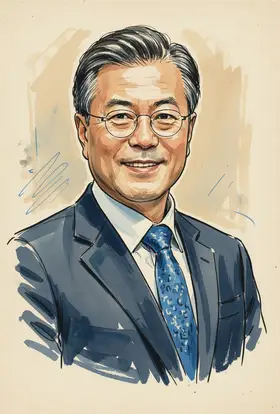
Moon Jae-in on Government Policies
TL;DR
Moon Jae-in's administration pursued government policies heavily focused on curbing speculative demand, which ultimately saw housing prices soar.
Key Points
He vowed to push for legislation banning the requirement to state one's academic background on job applications to prevent grade-based evaluation.
The administration introduced 18 housing policies, many focused on curbing demand side appetite through measures like increased capital gains tax and tighter lending rules.
Moon Jae-in’s government announced a "Comprehensive Action Plan for Governmental Innovation" in March 2018, focusing on prioritizing social values and transparency.
Summary
Moon Jae-in's tenure as president was characterized by numerous government policy announcements, most notably regarding real estate, which he stated would be based on equal opportunity and fairness. His administration declared it would no longer permit housing to be a mechanism for wealth building, leading to a combative stance against real estate speculators and multiple homeowners. Key policies focused on curbing demand, such as increasing capital gains tax, introducing restrictive borrowing conditions, and setting maximum initial sale prices for new apartments. However, critics argue that this primary focus on demand-side control, in the absence of sufficient supply increases, resulted in unintended negative consequences.
Toward the end of his presidency, the focus of his policies shifted somewhat, eventually culminating in an apology regarding his real estate policies after housing prices in Seoul more than doubled. The administration's initial resistance to increasing housing supply—believing supply was sufficient—was contradicted by data showing supply fell annually under his watch. The final major announcement finally targeted supply increases, a stark contrast to the initial two-thirds of policies that were demand-curbing. Furthermore, his administration implemented a "Comprehensive Action Plan for Governmental Innovation," focusing on shifting government operations toward social values, participatory democracy, and increased transparency.
Key Quotes
“Corruption eventually leads to the loss of everything. Throughout history, we have seen the authorities, economies and even national security lose their strength and crumble due to corruption,”
Frequently Asked Questions
Moon Jae-in's main focus in government policies, particularly during his term, was heavily concentrated on real estate and administrative innovation. On real estate, his goal was to curb housing speculation, though this proved highly controversial as prices rose significantly under his watch. He also initiated broad governmental innovation aimed at increasing public sector transparency and shifting operations toward social values.
The administration itself later admitted its housing policies were a significant disappointment, particularly as housing prices soared, which he cited as the biggest regret of his legacy. While he intended to make housing more affordable and curb speculation, many of his demand-side measures were criticized for inadvertently worsening the affordability crisis for non-homeowners. The policies largely failed to control the market as intended.
Moon Jae-in strongly advocated for governmental innovation, centered on the vision of "a government of the people." This involved shifting the focus of government operations to social values, increasing citizen participation in policy from suggestion to evaluation, and reforming old practices to build a government trusted by the people.
Sources10
Moon Jae-in administration announced “Comprehensive ...
Lessons From President Moon Jae In's Housing Policy and ...
What were the positives of Moon Jae-In's Presidency for ...
Korea's New President Introduces his Education ...
New South Korean Government Takes Steps to Improve ...
Eradicating corruption, starting point of all government ...
South Korea's game changer: New Southern Policy
| Vice Minister of the Interior and Safety spreads ...
The Transformation of South Korean Progressive Foreign ...
* This is not an exhaustive list of sources.