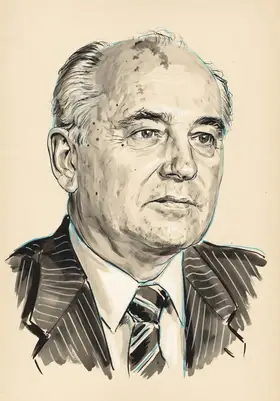
Mikhail Gorbachev on Chernobyl Disaster
TL;DR
Mikhail Gorbachev viewed the Chernobyl disaster as a tragic industrial catastrophe that exposed the Soviet system's flaws and accelerated his push for openness.
Key Points
He first addressed the disaster publicly on Soviet television 18 days after the explosion on April 26, 1986, defending his government's handling.
The catastrophe prompted him to found Green Cross International by 1992, cementing his commitment to environmentalism following the nuclear disaster.
In 2006, on the 20th anniversary, he suggested inaccurate information was initially given, stating the station was closed for 'planned repairs' to protect image.
Summary
Mikhail Gorbachev stated that the Chernobyl nuclear meltdown was perhaps the real cause of the Soviet Union's collapse five years later, seeing it as one of the most tragic incidents of his time. His life changed after being informed of the fire on April 26, 1986, and he later argued that the catastrophe shattered the Soviet militarized mentality, demanding an end to secrecy and xenophobia. He believed the event illuminated the horrific potential of nuclear war, prompting him to call for a nuclear test moratorium.
The disaster significantly challenged his simultaneous policy of Glasnost, as the initial governmental response involved secrecy and misinformation, leading to public distrust when foreign reports revealed the true scope. He initially defended the government's awkward handling, calling some reports "malicious lies," but the event ultimately reinforced his commitment to transparency and reform that he had championed. The immense financial burden of the cleanup also severely impacted the Soviet economy, derailing the aims of Perestroika.
Frequently Asked Questions
Mikhail Gorbachev stated that Chernobyl 'opened my eyes like nothing else,' allowing him to clearly imagine the horror of a nuclear bomb explosion. He used the disaster to argue for arms control, saying that 100 missiles were enough to destroy Europe. He also felt it shattered the Soviet militarized mentality.
He suggested that the nuclear meltdown at Chernobyl was perhaps the real cause of the collapse of the Soviet Union five years later. While many factors contributed to the dissolution, he viewed the accident as a pivotal event that exposed the systemic sickness of the old Soviet elite. [cite:4,cite:5]
The disaster immediately challenged the policy of Glasnost, as the government initially withheld information, contradicting the new promise of openness. This mishandling led to widespread public distrust, demonstrating to many that the promised governmental reform was superficial.
Sources8
Gorbachev and the Chernobyl Disaster - Aspects of History
Turning Point at Chernobyl
Gorbachev said: "the nuclear meltdown at Chernobyl...was perhaps the real cause of the collapse of the Soviet Union five years later.” Is this an accurate assessment? : r/history
Gorbachev in row on 20th anniversary of Chernobyl disaster | World news | The Guardian
Gorbachev Says the 'Worst Is Over,' Blasts West 'Lies' : Makes First Comment on Chernobyl - Los Angeles Times
Chernobyl and USSR - Keele University
Chernobyl May Have Been Gorbachev's Greatest Lesson – The Cipher Brief
Mikhail Gorbachev: 30 years after Chernobyl, time to phase out nuclear power
* This is not an exhaustive list of sources.