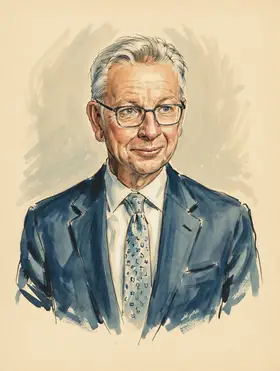
Michael Gove on Reforms
TL;DR
Michael Gove strongly advocates for evidence-based education reforms focused on autonomy, accountability, high standards, and curriculum rigor.
Key Points
He spearheaded the significant expansion of the academies programme, accelerating a process that gave schools autonomy from local authorities post-2010.
His curriculum reforms reinstated classics like Dickens and Austen, arguing for a knowledge-based approach that sometimes faced criticism for over-emphasising memorisation.
He defended raising academic standards as a 'personal crusade' to close the gap between rich and poor students, citing the need for basic literacy and numeracy.
Summary
Michael Gove, during his tenure as Secretary of State for Education, positioned himself as a strong advocate for sweeping reforms to the English education system. His core stance was driven by a moral purpose to liberate individuals from ignorance and make opportunity more equal, aiming to raise standards significantly above what he inherited. Key evidence for this position includes championing the expansion of the academies programme, which sought to weaken local authority control and give schools greater autonomy, and pushing for a more rigorous, knowledge-based national curriculum. He viewed these changes as necessary to equip the next generation with the skills for a globalised, technologically advanced world.
His reforms were contextualised within a belief that the previous system entrenched inequality, with poorer students disproportionately attending weaker schools, and that low standards were endemic. To address this, he focused on principles such as school autonomy, rigorous accountability via externally set tests, and improving teacher quality, drawing on international examples of high-performing systems. While he admitted the curriculum changes led to an 'unintended casualty' in Religious Education, his broader agenda involved making structural changes that, a decade later, continued to generate analysis regarding complexity and future coherence.
Key Quotes
By making GCSEs more demanding, more fulfilling, and more stretching we can give our young people the broad, deep and balanced education which will equip them to win in the global race.
Frequently Asked Questions
Michael Gove's primary goal was to fundamentally change the English education system to raise overall standards and combat deep-seated inequality. He believed this required giving schools more autonomy and increasing accountability to ensure every child had access to an ambitious, knowledge-rich curriculum.
Yes, Michael Gove faced substantial opposition from teachers' unions and academic associations regarding his overhaul of education, particularly concerning curriculum content and exam structures. This opposition led to teacher strikes and votes of no confidence in his leadership as Education Secretary.
Michael Gove consistently expressed that his reforms were already showing positive results, citing a reduction in the number of children in failing schools and improvements in core subject uptake. He argued that adhering to evidence-based principles was essential for continued success.
Sources8
Michael Gove speaks about the future of education reform
The Gove reforms a decade on - Institute for Government
Michael Gove as Education Secretary - Wikipedia
How Michael Gove's reforms drove me out of teaching | Teacher ...
'The impact of Govian reform has been unremittingly bad' | School ...
Michael Gove admits RE “unintended casualty of reforms” – REC
The glories and blunders of Michael Gove | The Spectator
* This is not an exhaustive list of sources.