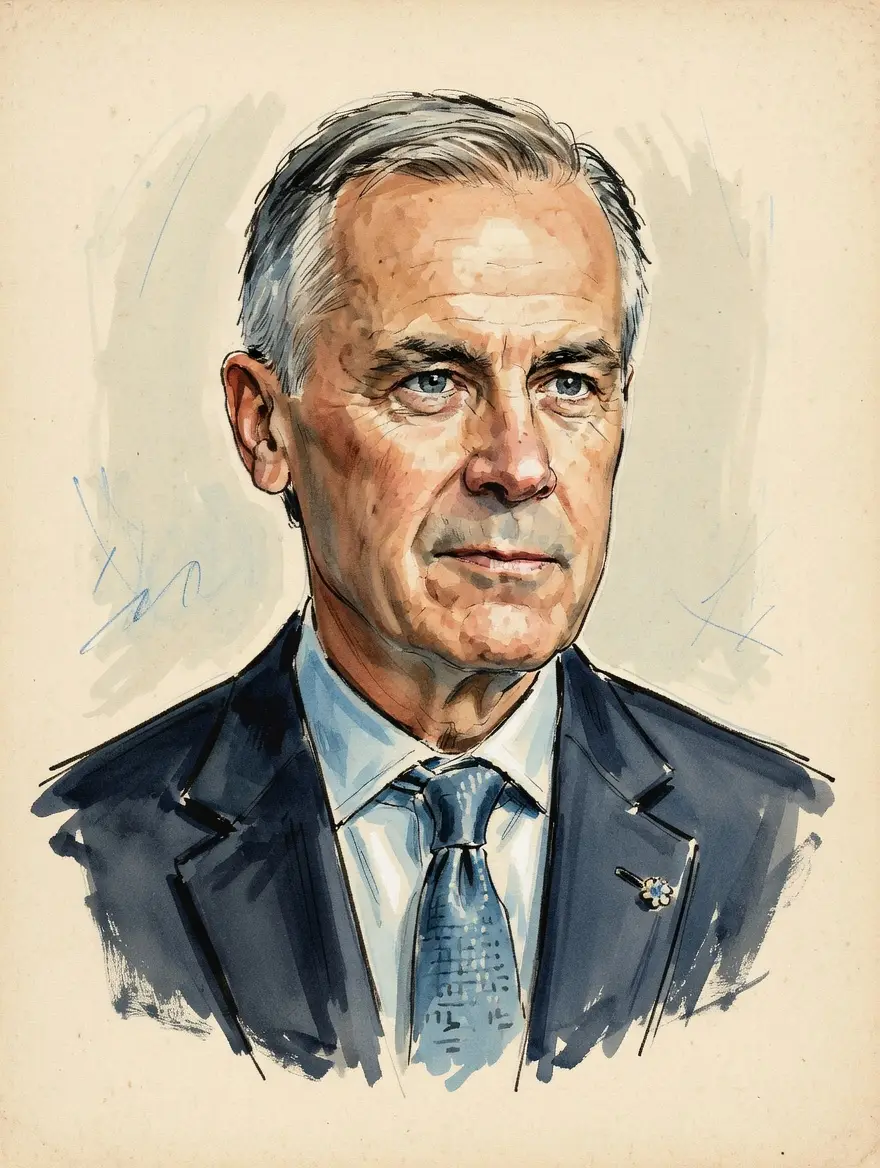
Mark Carney on Climate Change
TL;DR
Mark Carney strongly views investing in net-zero climate solutions as the greatest commercial opportunity that creates value while mitigating existential planetary risk.
Key Points
In a 2015 speech as Bank of England Governor, he warned that excessive fossil fuel investment threatened a financial collapse due to the 'carbon bubble' potential.
As UN Special Envoy, he supported a November 2023 report suggesting 65% of oil/gas and 90% of coal reserves must remain unburned to meet the 1.5°C goal.
As Prime Minister, Mark Carney openly acknowledged in December 2025 that Canada would not meet its legal greenhouse gas emissions targets for 2030 and 2035 under existing policies.
Summary
Mark Carney firmly believes that addressing climate change presents the world with the single greatest commercial opportunity of this era, framing it as a necessity for creating economic value. His core position is that companies and investors aligning with a net-zero transition will be rewarded, while those lagging behind will be punished by the market. As the UN Special Envoy on Climate Action and Finance, he emphasized that while climate change is an existential threat, pursuing investments and new technologies to eliminate it generates significant value. He advocates for mandatory carbon disclosure, stressing that what gets measured gets managed, a key priority he pushed during his tenure at COP26.
However, the implications of his stance have become complex following his election as Canada's Prime Minister, where his administration has made policy shifts that some critics argue complicate domestic progress. While he previously warned central bankers about the risk of a 'carbon bubble' potentially causing a financial collapse by stranding fossil fuel assets, as Prime Minister, he has acknowledged the country will miss its 2030 and 2035 emissions targets under current policy. He defends these shifts by prioritizing national economic effectiveness amid multiple crises and focusing on policies with the greatest impact, such as new methane rules and industrial carbon pricing, while moving away from consumer-facing carbon taxes.
Key Quotes
“It is governments who must choose whether, and how, to pursue that two-degree world,”
“What makes those emissions go down will be carbon capture and storage,”
Frequently Asked Questions
Mark Carney considers climate change an existential threat but also views the transition to net-zero as the largest commercial opportunity of our time. He strongly believes that finance must align with climate science to reward responsible actors and avoid economic disruption.
His core belief in the economic necessity and scientific urgency of climate action remains consistent, dating back to his time as central banker. However, his practical policy approach has evolved since becoming Canada's Prime Minister, moving toward prioritizing industrial decarbonization and scaling back consumer-focused measures amidst political and economic pressure.
He has stated that the vast majority of the world's remaining oil, gas, and coal reserves must be left in the ground to prevent catastrophic global heating. He endorsed conclusions that require leaving 65% of oil/gas and 90% of coal reserves unburned to maintain the 1.5°C target.
Sources7
Mark Carney Admits Canada Will Miss 2030 and 2035 Climate Targets as Policy Rollbacks Slow Progress
Mark Carney As Climate Radical?
'I'm the Same Me': Canada's Mark Carney Defends His Climate Record
Mark Carney: Investing in net-zero climate solutions creates value and rewards
How Mark Carney is complicating Canada's climate progress
The Climate and Energy Implication Hidden in Mark Carney's Davos Speech
Will Mark Carney the PM be as climate friendly as Mark Carney the banker?
* This is not an exhaustive list of sources.