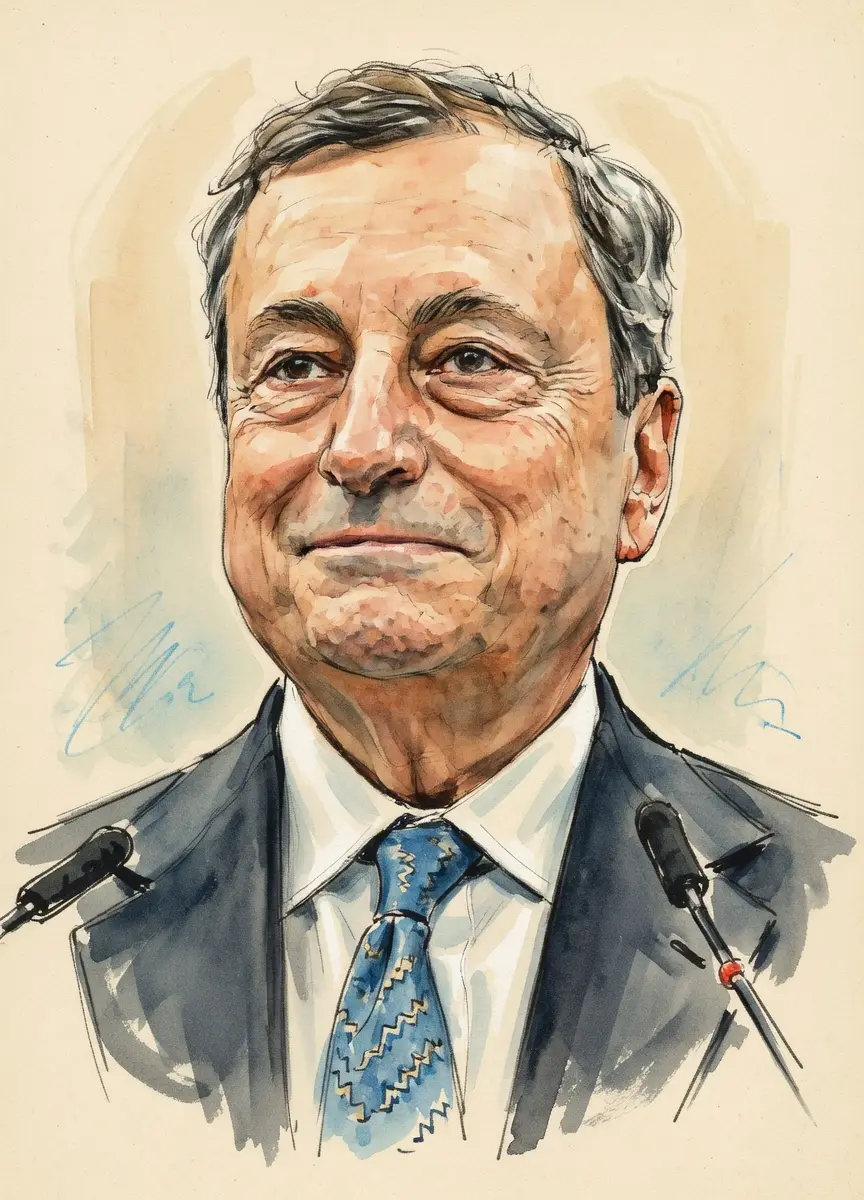
Mario Draghi on European Competitiveness
TL;DR
Mario Draghi advocates for deep structural reforms and massive public investment to bolster Europe's diminished global economic competitiveness.
Key Points
His report identified high energy prices as a primary headwind against European industrial competitiveness.
The strategy calls for a massive deployment of public investment, alongside private capital, to meet strategic goals.
The core goal is to secure Europe's strategic autonomy through enhanced technological and economic self-reliance.
Summary
Mario Draghi's core position on European competitiveness is that the continent faces a critical and urgent challenge to its economic standing, necessitating significant, structural overhauls to reverse a trend of declining relative performance. His report strongly emphasizes that Europe's high energy costs, regulatory fragmentation, and underinvestment in key technologies are eroding its global position, demanding immediate and ambitious action. He argues for a cohesive, continent-wide strategy rather than disparate national efforts to address these systemic weaknesses.
This stance implies a major evolution in European economic thinking, moving beyond simple market liberalization toward an active industrial policy backed by substantial, coordinated public finance. The proposed strategy, often referred to as the Draghi Report, calls for a substantial increase in public investment, particularly in green and digital transitions, to foster innovation and secure strategic autonomy. The urgency is underscored by the need to maintain the European social model while remaining competitive against other global economic blocs.
Key Quotes
“Failure to meet the 3% target for R&D expenditure set by EU leaders over two decades ago is a fundamental reason why the EU lags behind the US and China.”
... if the EU failed to catch up with its rivals, it would face "slow agony".
Frequently Asked Questions
Mario Draghi holds that European competitiveness is under severe threat and requires immediate, decisive action. He presented a report detailing necessary structural reforms and investment pushes to bolster Europe's standing.
The report highlighted persistent challenges such as high energy costs, regulatory fragmentation across member states, and insufficient public investment compared to global competitors. These factors are seen as eroding Europe's economic strength.
The central recommendation involves a new industrial strategy centered on massive, coordinated public investment, particularly in green and digital technologies. This aims to enhance innovation and secure the continent's long-term economic future.
Sources8
The future of European competitiveness
Draghi report
The Draghi Report: EU Competitiveness
Reflections on Mario Draghi’s report on the future of European competitiveness
Research Funding at the Forefront of EU Strategy in the Draghi Report
The Draghi Report: grabbed EU’s attention – now it’s time for the EU to put it into action
Draghi Report: The Future of European Competitiveness – A Competitiveness Strategy for Europe
Mario Draghi: The Future of European Competitiveness
* This is not an exhaustive list of sources.