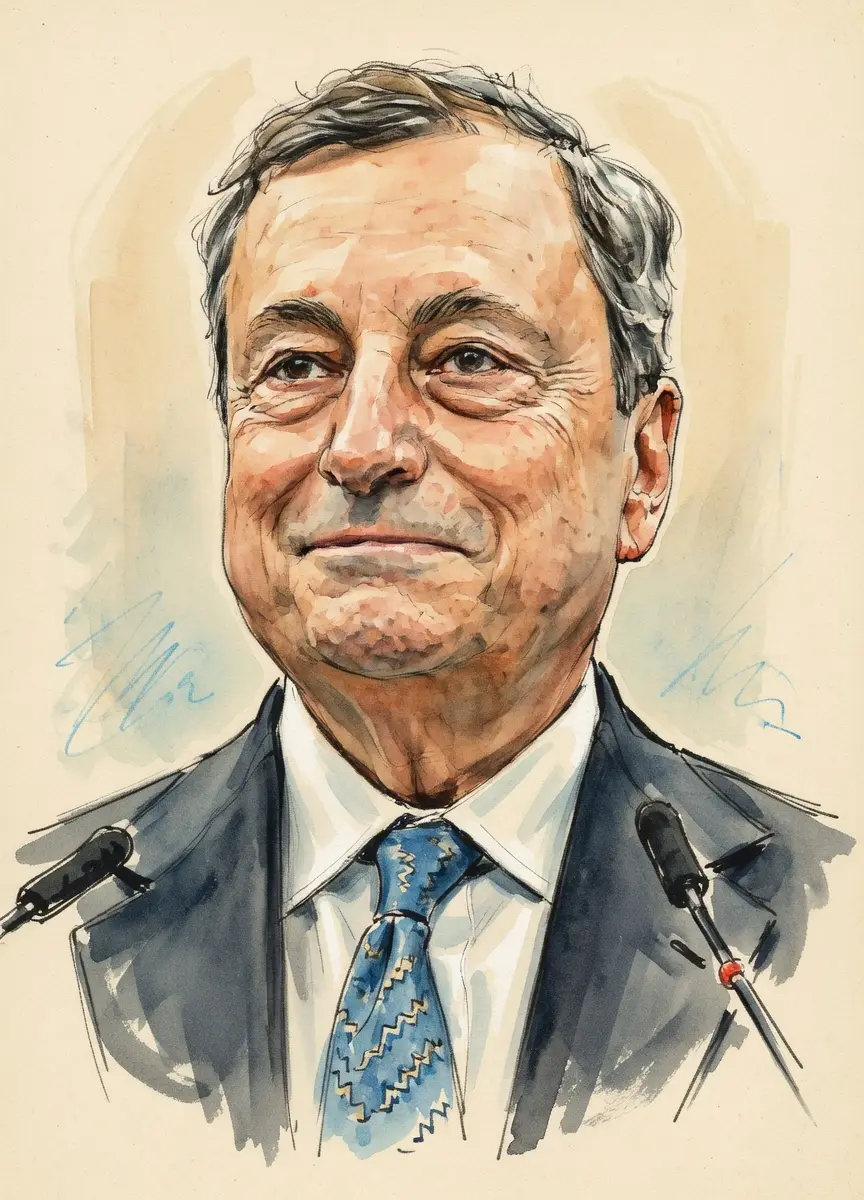
Mario Draghi on Electric Vehicles
TL;DR
Mario Draghi advocates for strategic industrial policy to ensure Europe's EV transition supports domestic competitiveness against global rivals.
Key Points
He stated that the 2035 deadline for eliminating exhaust emissions was expected to stimulate virtuous investment cycles that ultimately have not materialized as anticipated.
His strategy recommends that the EU stay firm on emission targets and the 2035 ban on internal combustion engine car sales to provide a clear incentive for EV production.
He advocates for EU-level industrial policies in clean technologies, including electric vehicles, to maintain a level playing field against subsidized Chinese technologies.
Summary
Mario Draghi's position on Electric Vehicles is primarily framed within his broader strategy to reform the European Economic Model and address the EU's declining competitiveness relative to the United States and China. He views the transition to electromobility as an economic necessity and a challenge that requires an urgent, paradigm-shifting EU industrial policy. The core goal is to maintain a thriving domestic automotive sector, ensuring that the shift to electric vehicles supports European jobs, R&D, and manufacturing sovereignty, rather than ceding this crucial value chain to foreign competitors, particularly China. He has noted that the EV market has grown slower than anticipated, and European innovation has lagged behind.
His recommendations often stress the need to remain firm on the 2035 zero-emission car sales target, viewing it as the essential foundation to secure long-term investments across the entire EV ecosystem, including batteries and charging infrastructure. However, he acknowledges the high costs and competitive gaps, suggesting that EU industrial policy must include measures like supporting the deployment of charging infrastructure and potentially including 'buy European' clauses in grants and fleet decarbonisation initiatives to counteract external subsidies and cost disadvantages. This balanced approach shows support for the transition's environmental goals while being highly critical of the current execution that risks undermining European industry.
Frequently Asked Questions
Mario Draghi supports maintaining the 2035 deadline for phasing out the registration of new internal combustion engine vehicles. He sees this firm legislation as crucial for pivoting the European market toward electric vehicles and securing necessary investments in the associated ecosystem.
He views the influx of Chinese EVs as a major competitive threat, noting that Chinese manufacturers benefit from lower costs and a more coordinated, large-scale approach across the value chain. His report emphasizes the need for the EU to rapidly adjust its industrial strategy to counter this pressure.
Draghi suggests a radical change in EU industrial policy, including incentivizing the full EV ecosystem and ensuring investments generate European jobs, possibly through 'buy European' clauses in subsidies. He stresses that the energy transition must be managed to boost, not undermine, European competitiveness.
Sources6
AVERE Press Release - Draghi Report - E-Mobility Sector Response - 09.09.24.docx
The Draghi Report Revisited | Automotive - HCSS
Mario Draghi's 2024 report - Automotive needs a radical change
Italian car output plunges, Draghi warns over growth - EUROMETAL
The Draghi Report: A Strategy to Reform the European Economic Model
Draghi's dilemma: Balancing action and reaction to the energy transition - Rabobank
* This is not an exhaustive list of sources.