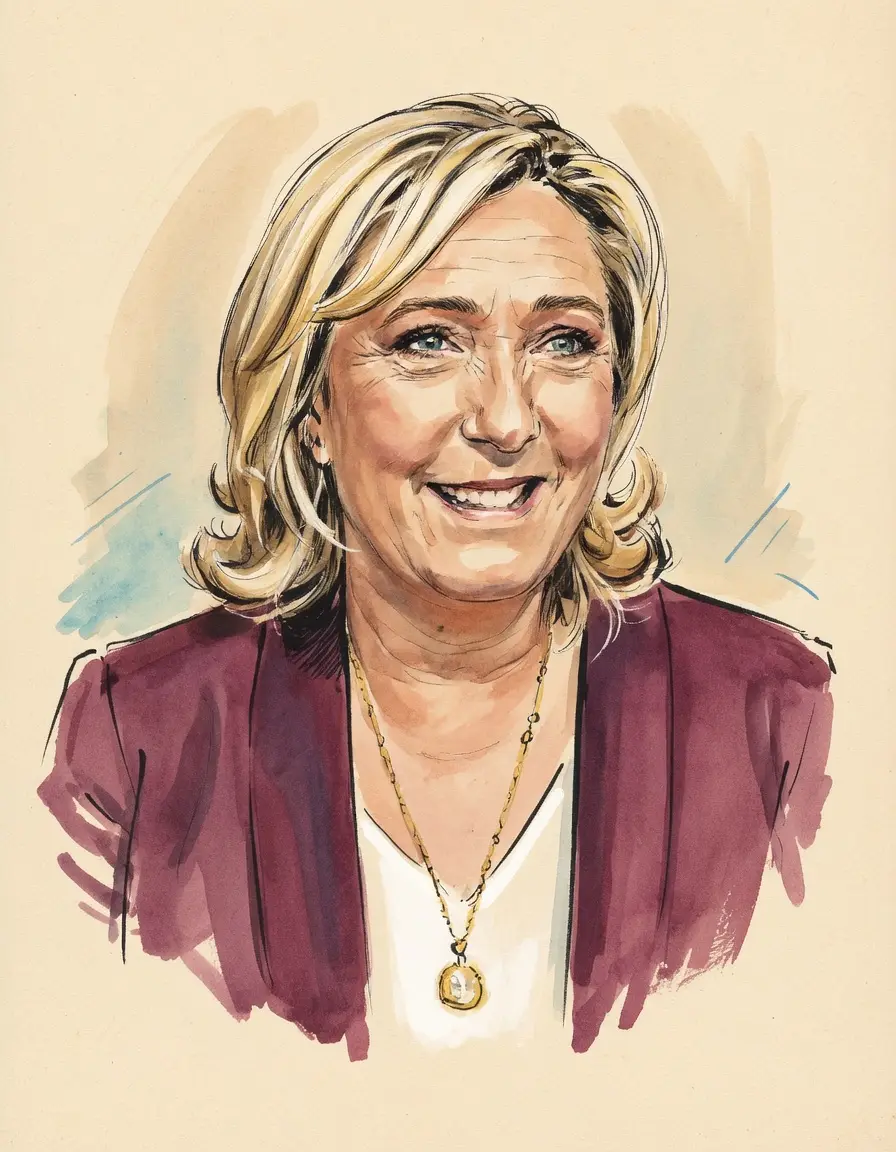
Marine Le Pen on Feminism
TL;DR
Marine Le Pen strategically aligns with certain women's rights to rebrand her far-right party while opposing core tenets of modern feminism.
Key Points
She has positioned herself as a defender of women's rights, referencing issues like wage equality and freedom from street harassment in her public communication.
Her stance has been criticized as 'femonationalism,' where she leverages gender equality to promote xenophobic and anti-Islamic agendas by framing Islam as the primary threat to women's rights.
She has adapted her platform by abandoning her father's opposition to abortion and same-sex partnerships, leading to a more balanced gender gap in her voter base.
Summary
Marine Le Pen seeks to reposition the far-right by consciously employing her femininity and adopting select feminist themes, though she stops short of claiming the feminist label herself. This strategy, often termed 'femonationalism' by critics, involves presenting herself as a modern, successful woman—a lawyer and mother—to create a 'kinder, gentler extremist' image, contrasting sharply with her father's more overtly misogynistic past. Key evidence of this tactic includes highlighting her personal stances, such as supporting existing abortion legislation, and using issues like street harassment to appeal to female voters, while simultaneously using gender equality rhetoric to justify anti-immigration and anti-Islamic stances, arguing that certain cultural practices threaten women's rights.
This appropriation of feminism has been met with considerable resistance, with activists labeling it as 'fake feminism' designed primarily as a vehicle for xenophobic and anti-immigrant politics. While her use of gender successfully closed the party's traditional gender voting gap and contributed to the normalization of the Rassemblement National, critics argue that her party's core platform remains antithetical to broader feminist goals of challenging patriarchal power dynamics. Her discourse racializes sexism by blaming migrant communities, rather than fundamentally challenging sexism within French society itself.
Key Quotes
I am a woman … I am a mother … I am a lawyer
“I fear that this Syrian refugee crisis is the beginning of the end of women's rights.”
Every woman must be protected in their right, if they choose, to wear shorts or a miniskirt
Frequently Asked Questions
Marine Le Pen states she identifies as a feminist in the context of defending women's rights and improving their lives, but she is critical of what she terms "neo-feminism." This distinction allows her to advocate for specific rights while distancing herself from broader feminist movements she opposes.
Under her leadership, the National Rally toned down the party's historical opposition to issues like abortion and same-sex civil unions, which were firmly opposed by her father. This shift was a strategic move to modernize the party's image and attract female voters who were previously alienated by the party's extreme-right stances.
Critics argue her alignment with feminist language is a calculated strategy, or 'illusion of feminism,' to sanitize the far-right's image without genuinely supporting substantive gender equality. They point to her core nationalist and anti-immigrant policies as being fundamentally incompatible with feminist principles, particularly concerning marginalized women.
Sources9
France's Marine Le Pen: The illusion of feminism
Marine Le Pen | Women's Studies and Feminism | Research Starters | EBSCO Research
Weidel, Meloni, and Le Pen: the rise of women who dominate three of Europe's main far-right parties
Cloaking the Front National: Marine Le Pen, Femininity, and the Evolution of a 'New' European Far-Right
Marine Le Pen: a fake feminist?
Marine Le Pen - Wikipedia
The gender card in far-right political discourse: Éric Zemmour and Marine Le Pen in France, a case study
Do you consider Marine Le Pen to be a feminist? : r/AskFeminists
“France's (Kinder, Gentler) Extremist”: Marine Le Pen, Intersectionality, and Media Framing of Female Populist Radical Right Leaders
* This is not an exhaustive list of sources.