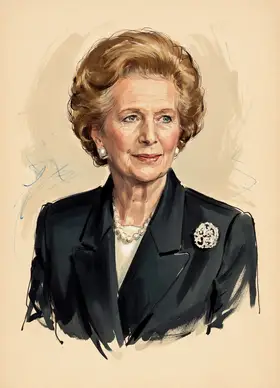
Margaret Thatcher on Bobby Sands
TL;DR
Margaret Thatcher firmly maintained that Bobby Sands was a convicted criminal who chose to end his own life.
Key Points
She declared on May 5, 1981, that Bobby Sands was a convicted criminal who chose to take his own life.
Her government swiftly introduced the Representation of the People Act 1981, preventing prisoners serving sentences over one year from standing for UK elections.
Her administration maintained the position that the hunger strikers were subject to ordinary criminal law, not political prisoner status.
Summary
Margaret Thatcher's core position regarding Bobby Sands, who died during the 1981 hunger strike, was an uncompromising refusal to grant political prisoner status. Upon his death, she stated in the House of Commons that Sands was "a convicted criminal" whose death was a choice that his own organization denied many victims. This stance was rooted in her determination that the government would not yield to the demands of the republican prisoners, viewing their protest as coercion rather than a legitimate political statement. The government maintained that those involved in paramilitary activity were subject to ordinary criminal law.
The implications of her refusal were profound, contributing to the deaths of nine other hunger strikers and escalating the conflict during the Troubles. While some international observers, including The New York Times, suggested that the government's seemingly unfeeling response risked giving Sands the "crown of martyrdom," Thatcher remained resolute. This firm line was consistent with her overall strategy toward paramilitary groups, prioritizing the rule of law over any concession that might validate the republican cause or its methods of protest.
Key Quotes
There is no such thing as political murder, political bombing or political violence. We will not compromise on this. There will be no political status.
There is no such thing as political murder, political bombing or political violence. We will not compromise on this. There will be no political status.
Frequently Asked Questions
Margaret Thatcher officially stated that Bobby Sands was a convicted criminal who chose to end his life by starvation. She emphasized that the government would not alter its policy concerning the status of republican prisoners in response to the hunger strike.
According to reports from those involved in back channels, Thatcher's government offered a deal in early July 1981 that met most of the prisoners' demands, such as wearing their own clothes. However, this offer was allegedly rejected by the external republican leadership, and Thatcher's government maintained its public stance.
Her strong refusal to grant political status meant the hunger strike continued after Sands' death, leading to the deaths of nine other republican prisoners. This uncompromising approach was central to her administration's handling of the crisis in Northern Ireland.
Sources5
Mrs. Thatcher Says Death of Sands Won't Alter London's Ulster Policy
Bobby Sands - Wikipedia
Thatcher's 'offer to hunger strikers' | Politics | The Guardian
Bobby Sands, the Irish Republican Army, and the Good Friday Agreement
Margaret Thatcher's secret admiration for IRA hunger strikers
* This is not an exhaustive list of sources.