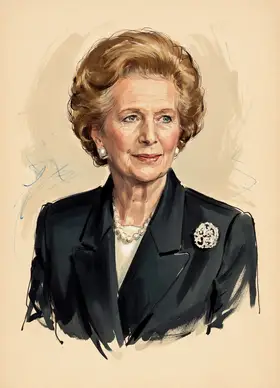
Margaret Thatcher on Apartheid
TL;DR
Margaret Thatcher fundamentally opposed Apartheid, yet consistently resisted international economic sanctions against the South African regime.
Key Points
She maintained that economic sanctions would harm the people in South Africa one sought to help, in 1986.
Thatcher privately called on South African President P.W. Botha in October 1985 to release Nelson Mandela.
Her government opposed comprehensive sanctions, believing negotiation and engagement were the best means to achieve change.
Summary
Margaret Thatcher expressed a strong moral opposition to the system of Apartheid, stating it was wrong and detestable, particularly condemning racial discrimination and forced removals within South Africa. Despite this clear condemnation, her policy approach was defined by a steadfast refusal to support comprehensive economic sanctions, which she believed would harm the very black South African population the international community sought to help. She argued that such measures were ineffective and contrary to free trade principles, preferring instead a strategy of constructive engagement and dialogue with the South African government in power.
Her stance placed her in direct opposition to most Commonwealth leaders and caused significant domestic and international tension, reportedly leading to a rift with the Queen who prioritized Commonwealth unity and moral alignment against the regime. Thatcher believed that encouraging internal reform through contact, including direct private appeals to leaders like P.W. Botha to release Nelson Mandela, offered the best prospect for a peaceful transition away from the system. Her government was, however, compelled to accept some limited, weakened sanctions in 1986 following pressure from the US Congress and the broader international community.
Frequently Asked Questions
Margaret Thatcher was unequivocally opposed to the system of Apartheid, viewing racial discrimination as morally wrong and stating that it must go. However, her policy was to actively fight against international economic sanctions aimed at pressuring the South African regime to change.
Yes, she eventually met with Nelson Mandela inside 10 Downing Street after his release in 1990. Prior to this, she had strongly advocated for his release in private correspondence with the South African leadership.
She believed that sanctions would not work to persuade the South African government to negotiate, and would instead damage the economy, harming black South Africans through job losses. She felt constructive engagement was the superior method for promoting peaceful change.
Sources8
How Margaret Thatcher helped end apartheid – despite herself
The Crown: The Queen Condemned Thatcher Over Apartheid Sanctions in South Africa
The Real History of the Crown: Thatcher and Apartheid
90s03. Tell Mrs Thatcher 'Stop Supporting Apartheid'
Margaret Thatcher infamously opposed economic sanctions on South Africa due to the belief that it would disproportionately harm the victims of apartheid. What does the historical evidence say? : r/AskHistorians
Thatcher, the Commonwealth and apartheid South Africa - Africa at LSE
Tell Mrs. Thatcher Stop Supporting Apartheid! - African Activist Archive
Margaret Thatcher on apartheid: Sixteen quotes
* This is not an exhaustive list of sources.