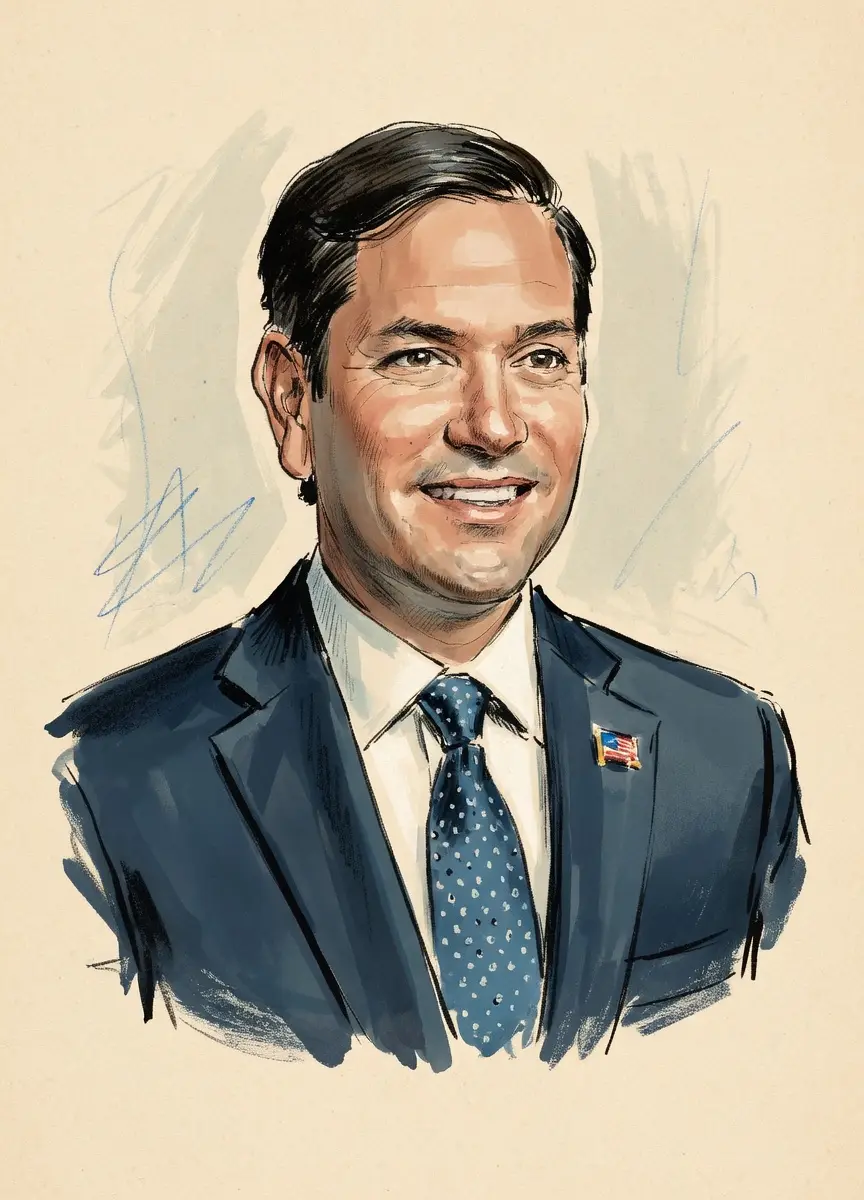
Marco Rubio on China
TL;DR
Marco Rubio views China as a fundamental global competitor whose national interests frequently conflict with those of the United States.
Key Points
He stated that geopolitical malpractice would occur if the U.S. did not maintain communications with China.
He expressed strong commitment to maintaining a firm partnership with Japan and other Indo-Pacific allies against Chinese domination.
Lawmakers requested that Secretary Rubio designate the Chinese Students and Scholars Association as a foreign mission of China's government due to CCP interests on U.S. campuses.
Summary
Marco Rubio, in his capacity as Secretary of State, states that the United States has an obligation to maintain communications with China because the two largest economies' national interests will often not align. He acknowledges that while the two nations are competitors in some areas and direct adversaries in others, communication is vital to manage these differences and avoid conflict, both economic and otherwise. He asserts that any agreements made must not come at the expense of the U.S. national interest, expecting China to act in its own interest just as the U.S. does.
He further notes that long-term challenges and irritants in the relationship will continue for the foreseeable future, which is a reality for the broader West as well. While seeking opportunities to work together where interests align for a positive global impact, his statements emphasize managing inevitable tensions while simultaneously pursuing firm commitments to allies in regions like the Indo-Pacific, where he has drawn a line against Chinese domination. A key component of his policy approach is ensuring that U.S. economic policy, particularly regarding trade and supply chains, does not leave the nation dependent on or vulnerable to China.
Key Quotes
“We're not going to live in a world in which China gets to dominate the Indo-Pacific,” said Secretary Rubio, "and we're not allowed to have commercial ties in that region because they're holding countries hostage."
Frequently Asked Questions
Marco Rubio generally adopts a competitive and critical stance toward China, viewing the nation as a fundamental adversary and competitor to the United States. As Secretary of State, he emphasizes the need to manage conflicting national interests while avoiding escalation.
While previously known as a 'China hawk' in the Senate, his current role requires diplomatic engagement. He acknowledges the need to communicate and manage competition rather than solely confront the nation, though the underlying competitive dynamic remains clear.
Secretary Rubio noted that U.S. and Chinese national interests frequently diverge, necessitating careful navigation to prevent economic or worse conflict. He stressed the importance of U.S. economic sovereignty, particularly concerning critical supply chains.
Sources6
What does Marco Rubio’s ‘unleash Chiang’ threat against Iran actually mean?
US-China at Munich: Rubio and Wang face-off
Secretary of State Marco Rubio at the Munich Security Conference
Secretary of State Marco Rubio Remarks to the Press
Secretary Rubio on U.S.-China Relations
Chairmen Moolenaar, Mast, Walberg Ask Rubio to Act on the Chinese Students and Scholars Association
* This is not an exhaustive list of sources.