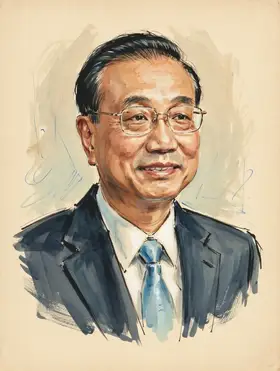
Li Keqiang on Xi Jinping
TL;DR
Li Keqiang represented a sidelined reformist faction whose political influence diminished relative to Xi Jinping's consolidation of power.
Key Points
His authority steadily eroded as Xi Jinping absorbed economic policymaking into Party organs, weakening the State Council between 2013 and 2023.
Li Keqiang publicly indicated in 2020 that approximately 600 million low- and middle-income people earned around 1,000 RMB per month.
Following his retirement in March 2023, Li Keqiang's death in October 2023 was interpreted by some analysts as a farewell to China's era of reform.
Summary
During the Xi Jinping–Li Keqiang Administration, the former premier Li Keqiang represented a political counterpart whose authority was systematically eroded by the paramount leader Xi Jinping. While initially sharing the top roles following the 2012 transition, Xi progressively centralized economic policymaking within Party organs, like the Central Commission for Comprehensively Deepening Reform, marginalizing the State Council led by the premier. This shift contrasted sharply with the preceding administration, marking a move away from collective leadership toward Xi establishing himself as the core leader. Evidence of this tension included Li Keqiang's occasional public statements, such as his remark about 600 million people earning low monthly incomes, which some analysts interpreted as undercutting Xi's narrative on poverty alleviation.
Li Keqiang's eventual departure from power in March 2023 symbolized the end of an era for many observers, who viewed his political trajectory as marking the definitive decline of the reform and opening-up faction. His diminished stature was evident in institutional changes, like the cancellation of the premier's annual press conference. Following his death, analysts noted that his memory fueled public distrust toward Xi Jinping, as Li became a symbol for an openness and economic pragmatism that was perceived to have been reversed by the current leadership. Ultimately, Li Keqiang served as a subordinate figure whose operational role in government was increasingly constrained by Xi's centralized political control.
Key Quotes
At the first plenary meeting of the new State Council following his appointment in March, he highlighted that his government's mission is to “ensure the sound and faithful implementation of the decisions and policies made by the Party Center and [to] put them very well into practice.”
Frequently Asked Questions
The political relationship was characterized by a power imbalance within the Xi Jinping–Li Keqiang Administration from 2013 to 2023. Although they held the top two positions, Li Keqiang's authority as Premier was progressively sidelined as Xi Jinping centralized control over key policy areas. This dynamic was frequently interpreted as a tension between Xi's core leadership and Li's more technocratic, reform-oriented approach.
Li Keqiang occasionally signaled policy independence from Xi Jinping's line, most notably by publicly stating that 600 million people in China had very low monthly incomes. This statement was seen by some as undermining Xi's official poverty alleviation achievements. However, any real policy divergence was ultimately constrained by Xi's supreme authority within the Party structure.
The passing of Li Keqiang in October 2023 was widely viewed by observers as symbolizing the complete end of the era of economic reform and openness. His death fueled public expressions of distrust and opposition toward Xi Jinping, as Li became an implicit symbol for an alternative, more moderate political path. The low-key funeral also suggested an effort by the current leadership to prevent public outpourings of grief that might carry political undertones.
Sources5
Li Keqiang's death fueling distrust, opposition toward Xi Jinping: experts
Xi Jinping–Li Keqiang Administration - Wikipedia
Li Qiang's Quiet Rise | ChinaFile
Li Keqiang, China's Premier Who Was Sidelined by Xi, Dies at 64
Li Keqiang, former Chinese premier and an advocate for reform, dies at 64
* This is not an exhaustive list of sources.