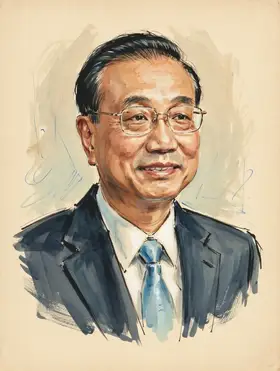
Li Keqiang on International Relations
TL;DR
Li Keqiang consistently advocated for a multilateral world order, opposing protectionism while promoting open, mutually beneficial global economic cooperation.
Key Points
He met with the leaders of six major international economic institutions via video link on December 6, 2021, pledging continued high-level opening up.
During a 2019 meeting, he stated that China consistently upholds the principle of mutual respect and non-interference in the internal affairs of other nations.
In a 2015 speech, he urged nations to reject Cold War and zero-sum mentalities, emphasizing that the post-World War II international order must be maintained.
Summary
Li Keqiang, in his capacity as Premier, strongly championed a stable and open international environment conducive to China's development, consistently stressing the need for multilateralism and adherence to international norms anchored by the UN Charter. He actively opposed the rise of unilateralism and trade protectionism, viewing these trends as detrimental to global economic recovery and stability. Evidence of this stance is seen in his meetings with international financial leaders where he promoted fair trade, stable supply chains, and cooperation on global challenges like climate change and public health. His diplomatic efforts often centered on expanding mutually beneficial economic engagement, particularly through promoting Chinese industrial exports like high-speed rail in Belt and Road Initiative partner countries.
His approach, sometimes termed “high-speed rail diplomacy,” focused heavily on practical cooperation, contrasting with a greater emphasis on high-level political positioning by other top leaders. He frequently engaged in multilateral forums like the East Asia Summit to reinforce principles of respecting ASEAN centrality and finding consensus through dialogue, while also advocating for the political recognition of China's development model as an alternative to Western paradigms. He consistently sought to project an image of China as a responsible major country willing to shoulder international obligations while remaining committed to reform and high-level opening up.
Frequently Asked Questions
Li Keqiang strongly favored an open, inclusive, and mutually beneficial global economic system. He consistently spoke out against protectionism and unilateral trade measures, believing they harm global stability and development. He stressed the importance of maintaining stable industrial and supply chains for worldwide economic health.
Li Keqiang affirmed China's support for the core role of the United Nations in international affairs and upheld the multilateral trading system centered on the WTO. He engaged constructively with bodies like the World Bank and IMF, advocating for fair vaccine distribution and debt service suspension under the G20 framework.
Yes, his diplomatic activities often involved promoting Chinese industrial capacity internationally, a practice dubbed 'high-speed rail diplomacy.' He sought to advance cooperation in areas like trade, investment, and infrastructure, particularly within the framework of Belt and Road Initiative partner countries.
Sources8
Li Keqiang Meets with UN Secretary-General António Guterres
Li Keqiang Holds Talks with German Chancellor Olaf Scholz, Emphasizing Deepening China-Germany Cooperation in the Process of Opening-up to Better Expand Mutual Benefit and Win-Win Results…
Li Keqiang Meets the Press with the Leaders of Major International Economic Institutions
Speech by H.E. Li Keqiang Premier of the State Council of the People's Republic of China At the 17th East Asia Summit
What Do Overseas Visits Reveal about China's Foreign Policy Priorities?
Foreign Ministry Spokesperson Wang Wenbin's Regular Press Conference on December 16, 2021
Chinese Premier Li Keqiang's speech at Davos 2015 | World Economic Forum
* This is not an exhaustive list of sources.