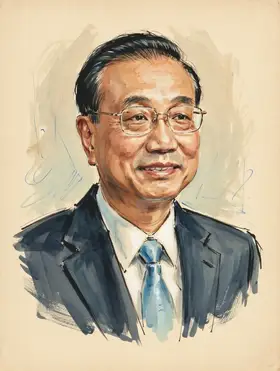
Li Keqiang on Economic Index
TL;DR
Li Keqiang promoted the 'Li Keqiang Index' as a more reliable alternative to official GDP figures.
Key Points
The Li Keqiang Index, which he reportedly adopted, comprises railway transportation tonnage, electricity consumption, and bank loans as its core components.
In 2014, he spoke of having 'very limited space for maneuvering' while exercising microeconomic control when facing challenging economic indices.
His market-oriented rhetoric, including the promotion of the index, became particularly prominent during the 'Mass innovation week' campaigns between 2015 and 2022.
Summary
Li Keqiang's position on economic measurement centered on a clear skepticism toward official Gross Domestic Product (GDP) statistics, which he believed were often over-reported or smoothed, particularly in earlier periods. This viewpoint led to the promotion of the 'Li Keqiang Index,' an alternative composite measure suggested to him by consultants, which tracks real economic activity through indicators like electricity consumption, railway freight volume, and bank loans. This index was adopted by the former premier around a decade ago as a direct result of this lack of faith in the primary national statistic.
This emphasis on alternative indicators like the Li Keqiang Index was framed by some as a reflection of the leadership's attention to detail and pragmaticism in grassroots investigation, contrasting with the official figures. Analysis of his rhetoric during his tenure suggests Li Keqiang favored market-oriented policies, and his promotion of this index reflected a desire for greater transparency in gauging the actual course of China's economy, especially when official numbers seemed inconsistent with underlying activity. His successor has not continued to promote this specific index.
Key Quotes
“Although there are turbulences, the overall fundamentals are still upbeat.
“We've had very limited space for maneuvering and carrying out our new fiscal and monetary policies, and we were faced with touch choices in exercising microeconomic control,” Li told reporters. “What should we do? When confronted with such challenges, one needs to show guts.”
Frequently Asked Questions
Li Keqiang viewed the official GDP figures with skepticism, believing they sometimes overstated the true rate of economic growth. Consequently, he advocated for and lent his name to the 'Li Keqiang Index' as a more reliable proxy. He suggested this alternative index reflected the real economic pulse through measures like electricity use and rail freight.
The index attributed to Li Keqiang is a composite metric composed of three main indicators of real economic activity. These indicators are industrial electricity consumption, railway transportation tonnage, and bank loans. This proxy was developed by consultants to better capture economic trends than official statistics alone.
No, Li Keqiang, as premier, expressed a lack of faith in China's official GDP figures in earlier years. This sentiment was reportedly fueled by advice that national economic statistics were likely inaccurate or subject to political smoothing. His promotion of an alternative economic index directly stemmed from this distrust.
Sources4
Growth rates and the dark underside of China's economy
Remembering Li Keqiang: Policy Divergence in Zhongnanhai and Its Economic Consequences
Measurement Muddle: China's GDP Growth Data and Potential Proxies
Troubling economic data from China indicates slowdown
* This is not an exhaustive list of sources.