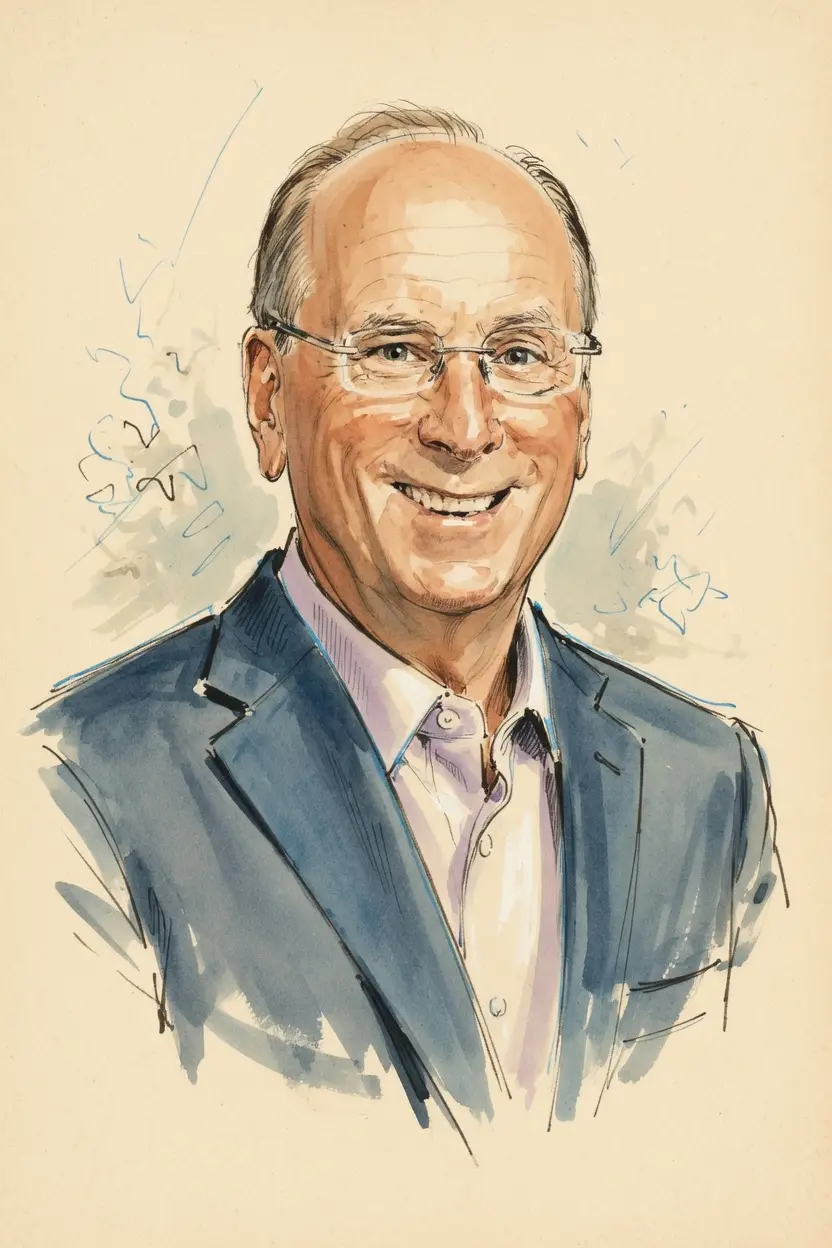
Larry Fink on Climate Change
TL;DR
Larry Fink views climate change as a material, long-term investment risk necessitating capital reallocation and corporate disclosure.
Key Points
In his 2020 letter, he explicitly stated that climate risk is investment risk and predicted a 'fundamental reshaping of finance' through capital reallocation.
He opposes blanket divestment from fossil fuels, arguing it is 'greenwashing' and does not change the world's carbon footprint, suggesting engagement is better.
He has asked companies to publish disclosures aligning with TCFD recommendations and industry-specific SASB guidelines by year-end to manage risk effectively.
Summary
Larry Fink's core position centers on framing climate change as a fundamental, long-term investment risk that drives capital reallocation across the global financial system. He has consistently asserted that climate risk is investment risk, urging companies to assess physical impacts and policy shifts related to the transition to a low-carbon economy. This stance is evidenced by his commitment to integrate sustainability into portfolio construction, strengthen stewardship activities, and demand standardized disclosures using frameworks like TCFD and SASB from portfolio companies to enable better risk assessment.
His approach emphasizes engagement and market mechanisms over outright divestment, arguing that abandoning fossil fuels does not change global demand and can lead to negative societal consequences like higher inflation, particularly in developing nations. He advocates for a transition that is both fair and just, which requires technological innovation and public-private partnership to finance infrastructure and support emerging economies. While strongly pushing for transparency and better preparation, Fink has also stated that BlackRock is not the 'environmental police,' preferring to hold boards accountable via voting for insufficient progress on material disclosures.
Key Quotes
Climate change has become a defining factor in companies' long-term prospects.
I believe that the pandemic has presented such an existential crisis – such a stark reminder of our fragility – that it has driven us to confront the global threat of climate change more forcefully and to consider how, like the pandemic, it will alter our lives.
Nothing is more greenwashing than divestiture. Because it doesn't change the [carbon] footprint of the world.
Frequently Asked Questions
Larry Fink views climate change as a primary, long-term structural risk to investment returns, driving a significant reallocation of capital globally. He strongly advocates for companies to manage these risks transparently and prepare their business models for a net-zero economy.
His fundamental view that climate risk is investment risk has remained consistent since at least 2020, though the emphasis and specific actions taken by BlackRock have evolved. For example, recent reports suggest an omission of climate language in his 2025 annual letter, indicating a potential shift in direct messaging focus.
Larry Fink generally opposes outright divestment, calling it a form of 'greenwashing' that fails to change global emissions because someone else will buy the assets. He believes staying invested and engaging with companies to drive transition and transparency is the more effective path.
Sources9
In Annual Letter, BlackRock’s Larry Fink Omits Climate Change, DEI And ESG
Larry Fink's 2021 letter to CEOs
How Wall Street turned its back on climate change
The ripple effects of Larry Fink's letter on sustainability leaders
'Bring the problem forward': Larry Fink on climate risk | McKinsey
Comment: BlackRock's wording change on climate change
BlackRock's Larry Fink: Don't divest fossil fuels, stay in the game
Larry Fink: BlackRock is not the environmental police
* This is not an exhaustive list of sources.