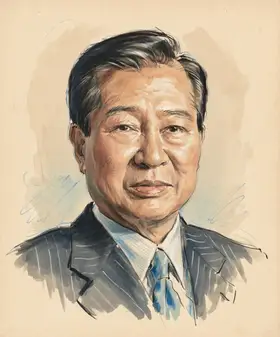
Kim Dae Jung on Reforms
TL;DR
Kim Dae Jung strongly advocated for bold, comprehensive economic reforms following the 1997 Asian Financial Crisis to modernize South Korea's economy.
Key Points
His administration established the Regulatory Reform Committee in 1998 to review new and existing regulations, focusing on improving the regulatory environment.
The reform effort concentrated on structural adjustments in the financial sector, corporate governance (specifically chaebol restructuring), and labor market flexibility.
He advocated for structural reforms over fiscal or monetary stimulus as the path to lasting prosperity for the South Korean economy.
Summary
Kim Dae Jung, upon becoming president in the wake of the 1997 Asian Financial Crisis, made comprehensive economic reform a core mission of his administration. His position was to move away from the previous state-led, debt-leveraged growth model that had been exposed as a 'miracle' built on a weak foundation. He immediately initiated a broad campaign for free-market reforms, which included reducing government regulation and opening the insulated economy to foreign investment and competition, often following recommendations from the International Monetary Fund (IMF).
His reform agenda was ambitious, focusing on the financial, corporate, and labor sectors simultaneously, though his approach sometimes featured 'command and control' elements in implementation. He skillfully used his executive power and the crisis atmosphere to push through foundational legislative changes, such as creating a powerful Financial Supervisory Commission, while also engaging in tripartite negotiations with business and labor to secure concessions on issues like corporate restructuring and labor flexibility. Despite facing political hurdles from a hostile legislature, his early efforts were credited with enabling a rapid recovery from the severe economic downturn.
Key Quotes
democracy in South Korea is inevitable
... we should forgive gladly because it leads to peace and reconciliation
Frequently Asked Questions
Kim Dae Jung viewed bold, comprehensive economic reforms as essential following the 1997 Asian Financial Crisis. He believed the old system of state-led growth, characterized by close ties between government and large conglomerates (chaebol), was unsustainable and corrupt. His reforms aimed to transition South Korea toward a more liberal, market-based economy.
His administration targeted three main areas: the financial sector through strengthening regulation and promoting mergers; the corporate sector by demanding transparency and restructuring of the chaebol; and the labor market by negotiating for greater flexibility. He utilized a powerful Financial Supervisory Commission to enforce many of these changes.
Yes, he faced significant challenges, including a divided government where the opposition controlled the National Assembly for a period, labor union resistance to layoffs, and inherent bureaucratic reluctance to relinquish control. Despite this, his initial 'honeymoon' period allowed for swift legislative action on the foundational laws.
Sources7
Economic Reform in South Korea: An Unfinished Legacy
Kim Dae-jung's Role in the Democratization of South Korea
Bold South Korean Reforms Deserve U.S. Support
Korea After the Crash
REFORMING KOREA INC.: THE POLITICS OF STRUCTURAL ADJUSTMENT UNDER KIM DAE JUNG
Kim Dae-jung – Nobel Lecture
New Regulatory Reform Committee Offers Rare Window for Change
* This is not an exhaustive list of sources.