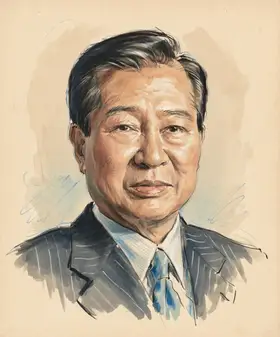
Kim Dae Jung on Nobel Prize
TL;DR
Kim Dae Jung received the Nobel Peace Prize for promoting democracy, human rights, and inter-Korean reconciliation.
Key Points
He was awarded the 2000 Nobel Peace Prize for work on democracy, human rights, and reconciliation with North Korea.
His Nobel lecture emphasized that democracy is the absolute value essential for human dignity, economic development, and social justice.
The prize recognized his 'sunshine policy' toward North Korea, which led to the first inter-Korean summit in June 2000.
Summary
Kim Dae Jung was awarded the Nobel Peace Prize in 2000 recognizing his dedicated work for democracy and human rights within South Korea and across East Asia. The prize specifically commended his efforts toward peace and reconciliation with North Korea, culminating in the historic 2000 summit with the North Korean leader. He viewed the honor as a testament to the countless people and colleagues in Korea who fought for democracy and unification.
He outlined his core philosophy, the "sunshine policy," which emphasized peaceful coexistence and cooperation over absorption or conflict. In his Nobel Lecture, he connected the values of democracy and human dignity to sustained economic development, arguing that a lack of democracy is a foundation built on sand. Though honored, he humbly stated the award should also go to the many who supported his people's long struggle.
Key Quotes
I have lived, and continue to live, in the belief that God is always with me.
Frequently Asked Questions
Kim Dae Jung received the Nobel Peace Prize in 2000 for his work promoting democracy and human rights in South Korea. The Nobel Committee also honored his efforts for peace and reconciliation with North Korea.
His policy was known as the "sunshine policy," which sought to replace distrust with peace and cooperation between the two Koreas. This approach led to the historic summit with the North Korean leader in June 2000.
He stated that he was infinitely grateful but felt the honor should also go to the countless people and colleagues in Korea who strived for democracy and human rights. He pledged to dedicate the rest of his life to peace.
Sources6
Kim Dae-jung – Facts - NobelPrize.org
Kim Dae-jung - Wikipedia
South Korean President Wins Nobel Peace Prize for Efforts to Heal Rift
Kim Dae-Jung | Biography, Achievements, & Nobel Prize | Britannica
* This is not an exhaustive list of sources.