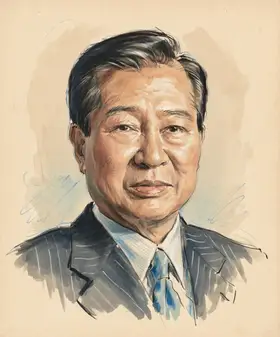
Kim Dae Jung on Imprisonment
TL;DR
Kim Dae Jung vehemently opposed unjust imprisonment, having been a death row inmate and victim of prolonged detention.
Key Points
In 1980, he was sentenced to death by the military regime for charges that included instigating agitation, with the sentence later commuted.
He was placed under house arrest again in February 1985 immediately upon his return from exile in the USA.
His writings from prison, such as letters to his family, reflect on the experience of incarceration and its spiritual implications.
Summary
Kim Dae Jung's personal history is deeply intertwined with unjust imprisonment, which shaped his lifelong commitment to human rights and democracy. During the 1970s and 1980s under military regimes, he experienced numerous instances of detention, including being sentenced to death in 1980 for alleged treason, a sentence later commuted to life imprisonment and then a 20-year term. He spent significant time under house arrest and was exiled twice, experiences which Amnesty International actively campaigned against while he was a prisoner of conscience. His opposition to such politically motivated confinement fueled his political activism and his pursuit of democratic reforms in South Korea.
His perspective on imprisonment evolved from a personal struggle against authoritarian repression to a broader critique of state power violations. Even after his release and later as President, he was involved in issues concerning the imprisonment of others, such as when rights groups urged his administration to review cases of long-term political prisoners held under the National Security Law. His own suffering under detention informed his later political stance, where he sought to establish a legal framework that respected international human rights standards.
Frequently Asked Questions
Kim Dae Jung held a strongly negative position on imprisonment when it was used as a tool of political repression. His own history includes being sentenced to death and spending years imprisoned or under house arrest by authoritarian regimes. This personal experience fueled his advocacy for human rights and the rule of law.
His fundamental stance against political imprisonment has remained consistent, as his suffering under detention defined much of his activism. However, as president, his administration faced scrutiny regarding the ongoing imprisonment of unionists, showing the complexities of balancing reform with state security concerns. His ultimate goal was the end of politically motivated detention.
Kim Dae Jung documented his experiences as a prisoner of conscience, using his prison writings to reflect on themes like hospitality and maintaining character. He often wrote to his family from confinement, detailing his efforts to survive and maintain his resolve despite being sentenced to death at one point.
Sources9
In 1980 I was sentenced to death by the military regime for six months in prison...
Wife of South Korean Dissident Says That Imprisonment Appears to...
Kim Dae-jung, human rights champion and former South Korean president, dies
U.S. officials nonviolently intervene in South Korea to protect leading dissident Kim Dae Jung, 1985
Kim Dae-jung's Role in the Democratization of South Korea
Kim Dae-jung – Biographical - NobelPrize.org
'South Korea: continuing imprisonment of Korean Confederation of Trade Unions (KCTU) President, Mr. Dan Byuong-ho
View of Hospitality in the Prison Writings of Kim Dae-Jung
Long-Term Prisoners Still Held under the National Security Law
* This is not an exhaustive list of sources.