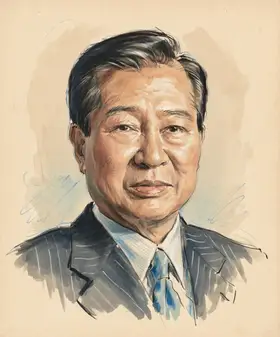
Kim Dae Jung on Hallyu (Korean Wave)
TL;DR
President Kim Dae Jung officially advocated for and began government support for the cultural industry as a key national export strategy.
Key Points
In 1998, President Kim Dae-jung officially proposed the "Culture as a Nation" policy, directly linking culture to national strategy.
His administration increased the budget for the cultural industry from USD 14 million in 1998 to USD 84 million in 2001 to support overseas expansion.
The foundation of his policy was to use the country's cultural potential to improve the national image following the 1997 financial crisis.
Summary
Kim Dae Jung, as president, officially endorsed and implemented policies to foster the cultural industry, marking a significant shift in national strategy. In 1998, he proposed the "Culture as a Nation" policy, viewing the burgeoning Korean Wave as a means to boost the economy following the 1997 Asian financial crisis. His administration is noted for taking concrete steps to support this sector, including increasing the budget allocated to the cultural industry substantially between 1998 and 2001 to aid its expansion overseas. This initiative laid institutional groundwork for the subsequent growth of Hallyu.
This governmental push by the former president was strategic, aiming to convert cultural strength into diplomatic power and enhance the national image, which had previously been associated with conflict and poverty. While some later analyses suggest the overall success of Hallyu was an unintended "success without design," Kim Dae Jung's official proposal and budgetary actions represent a clear, top-down effort to institutionalize and promote Korean culture internationally. This early governmental focus on cultural exports provided essential, albeit perhaps not fully coordinated, support for the developing phenomenon.
Frequently Asked Questions
Kim Dae Jung's main policy was the introduction of the "Culture as a Nation" initiative starting in 1998. This positioned the cultural industry, including the burgeoning Hallyu, as a core component of the national economic and diplomatic strategy.
Yes, his administration provided concrete financial support to the cultural sector. The budget for the cultural industry saw a significant increase under his term, moving it from a marginal sector to one receiving focused state investment.
He viewed the Korean Wave as a strategic response to the economic difficulties following the 1997 Asian financial crisis. The president aimed to reorient the economy toward cultural exports to build social capital and improve the country's global standing.
Sources10
The Application of the “Korean Wave” in South Korea's Cultural Diplomacy
Korean Wave - Wikipedia
Success without Design: Hallyu (Korean Wave) and Its Implications for Cultural Policy
The Growth of South Korean Soft Power and Its Geopolitical Implications
SOUTH KOREA'S CREATIVE ECONOMY: A CASE STUDY ON THE HALLYU WAVE (KOREAN WAVE)
Hallyu (Korean Wave) as Korea's Cultural Public Diplomacy in China and Japan
Hallyu – Everything you need to know about the Korean Wave
The Korean Wave as the Globalization of South Korean Culture
The Korean Invasion
* This is not an exhaustive list of sources.