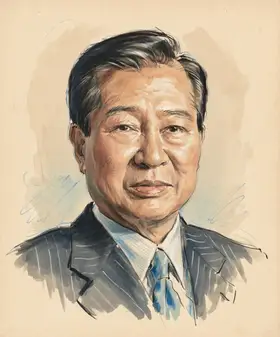
Kim Dae Jung on Gwangju Uprising
TL;DR
Kim Dae Jung consistently opposed the military's violent suppression of the Gwangju Uprising, for which he was imprisoned.
Key Points
He was arrested on May 17, 1980, on charges of instigating the protests that became the Gwangju Uprising.
His conviction by the military regime was for inciting the uprising, resulting in a death sentence that was later commuted.
As President in 1997, he advised the pardon of former Presidents Chun Doo-hwan and Roh Tae-woo, convicted for their roles, in the name of national reconciliation.
Summary
Kim Dae Jung's position on the Gwangju Uprising has been consistently one of condemnation for the military's violent suppression of the pro-democracy demonstrators. As a leading opposition politician, his arrest, alongside other leaders, on suspicion of instigating the protests on May 17, 1980, preceded and arguably fueled the intensity of the uprising in Gwangju. Following the crackdown, he was ultimately convicted and sentenced to death by the military regime for his role in inciting the demonstrations, despite having been imprisoned when they began. His sentence was later commuted following international intervention.
Even after achieving the presidency, the spirit of the May 18 Democratization Movement remained a significant marker of his political trajectory and his commitment to democratization. He was the first president, following the transition to democracy, who had been directly implicated in the events, having been sentenced to death for his alleged involvement. Upon taking office, he pardoned the former authoritarian leaders, including the one responsible for the massacre, in the name of national reconciliation, reflecting his broader philosophy.
Frequently Asked Questions
Kim Dae Jung was fundamentally opposed to the violent military suppression of the Gwangju Uprising in May 1980. He and other opposition figures were arrested prior to the massacre under suspicion of instigating the movement against military rule.
Yes, the military regime that crushed the uprising convicted Kim Dae Jung and sentenced him to death for inciting the protests. This sentence was eventually reduced following international pressure.
After being elected president, Kim Dae Jung, consistent with his philosophy of reconciliation, advised the presidential pardon of the former authoritarian leaders convicted for the coup and the Gwangju massacre. This was done in the interest of national unity.
Sources5
That May when truth was muzzled - The Korea Herald
Revisiting the Five Principles for Solving the Gwangju Problem: Focusing on Forgiveness and Reconciliation
Gwangju Uprising - Wikipedia
Gwangju Uprising | Facts, Massacre, & Dates | Britannica
History Lessons. Dedicated to the Centennial of Kim Dae-jung
* This is not an exhaustive list of sources.