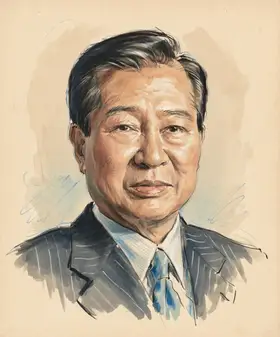
Kim Dae Jung on Foreign Policy
TL;DR
Kim Dae Jung's foreign policy centered on pursuing peace and reconciliation with North Korea through his hallmark Sunshine Policy.
Key Points
He was awarded the 2000 Nobel Peace Prize for his efforts toward democracy and reconciliation with North Korea.
His administration's flagship engagement strategy was the Sunshine Policy, which prioritized reconciliation and cooperation over confrontation with the North.
During his 2001 meeting with the incoming US President, he secured support for his vision for peace on the Korean Peninsula while discussing policy coordination.
Summary
Kim Dae Jung's foreign policy was overwhelmingly defined by his commitment to improving inter-Korean relations, culminating in the 'Sunshine Policy' which he implemented during his presidency (1998–2003). This policy aimed to lay a foundation of goodwill and friendship to facilitate the peaceful reunification of the two Koreas, which had been technically at war since 1950. A key evidence of this approach was the landmark 2000 summit with the leader of North Korea, which allowed separated families to meet and resulted in agreements for economic, cultural, and humanitarian cooperation. This work toward peace and reconciliation earned him the Nobel Peace Prize in 2000.
His administration's approach to North Korea was characterized by a relentlessly pursued rapprochement agenda, using an indirect and cautious style to mitigate tensions and encourage engagement. While he was also focused on strengthening the alliance with the United States, which he viewed as a close cooperative working relationship, his vision for peace on the Peninsula was central to his international engagement. His foreign policy decisions, including the framework for the Sunshine Policy, were notably driven by his distinct personality characteristics, such as a high need for power coupled with a relationship focus, which shaped his decision-making processes.
Frequently Asked Questions
Kim Dae Jung's primary foreign policy focus was achieving peace and reconciliation with North Korea through engagement. This strategy was formalized as the 'Sunshine Policy.' He believed this approach was the surest path to national reconciliation and regional stability.
The Sunshine Policy, implemented by Kim Dae Jung, was a diplomatic approach toward North Korea emphasizing engagement, economic cooperation, and humanitarian exchange rather than pure deterrence. Its goal was to build trust to lay a foundation for peaceful reunification.
He sought to work closely with the United States to achieve peace on the Korean Peninsula, agreeing to close policy coordination. However, his approach was rooted in dialogue with the North, which at times led to frank discussions with the US administration about the nature of the North Korean regime.
Sources9
Remarks by President Bush and President Kim Dae-Jung of South Korea
Kim Dae-jung – Speed read - NobelPrize.org
"United States Foreign Policy and Human Rights in the Third World" by Kim Dae Jung
The Transformation of South Korean Progressive Foreign Policy
Presidential Personality and Foreign Policy Decision-Making: The Sunshine Policy under Kim Dae-jung (1998–2003)
Kim Dae Jung: A Future Leader's Moment of Truth
Kim Dae-jung's Role in the Democratization of South Korea - Association for Asian Studies
President Kim Dae Jung
Kim Dae-Jung's Leadership as Relevant to the Sunshine Policy (1998-2003)
* This is not an exhaustive list of sources.