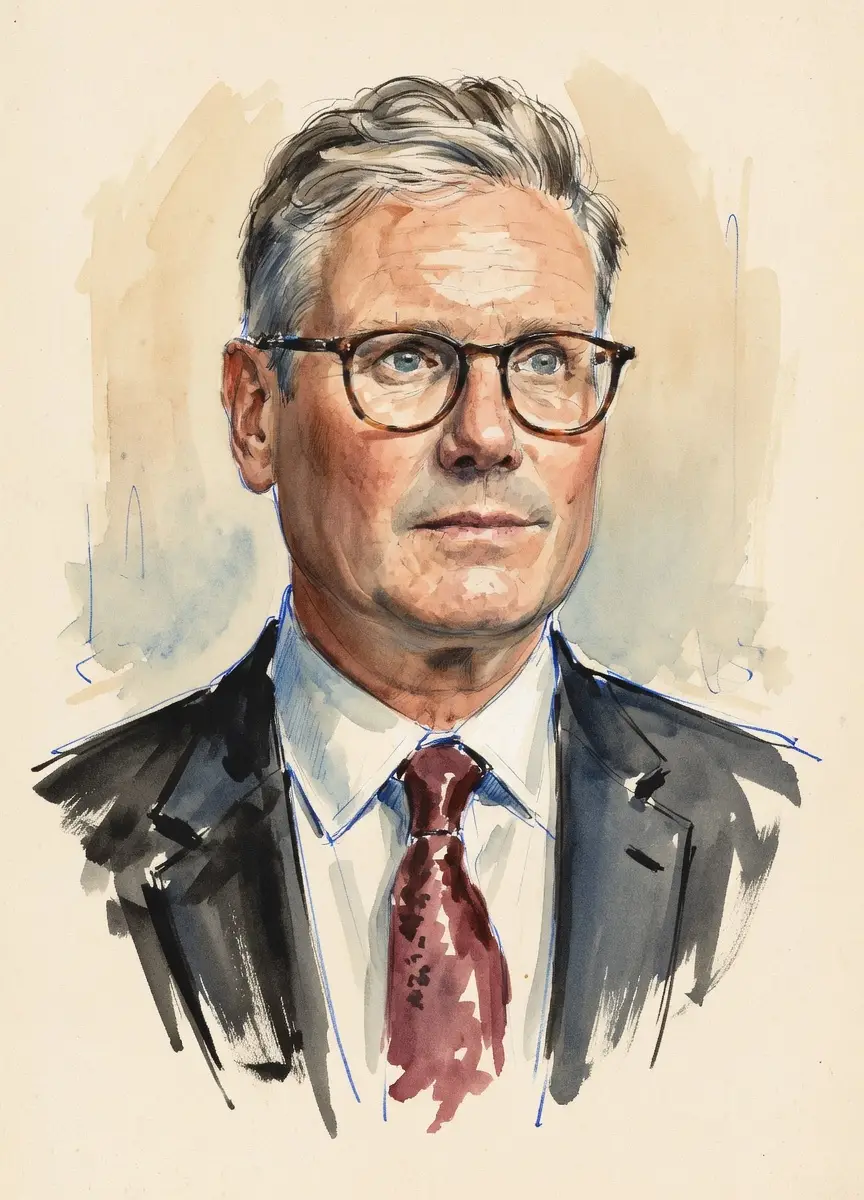
Keir Starmer
- Known for
- Labour Party leader, UK Prime Minister, Human rights lawyer
- Born in
- Southwark, United Kingdom
- Education
- Bachelor of Civil Law (BCL), St Edmund Hall, Oxford
Keir Starmer, a former Director of Public Prosecutions, became Prime Minister in 2024 after leading the Labour Party to a landslide election victory. His tenure has been defined by a sharp shift towards the political centre, emphasizing stability and national renewal over the previous leadership's left-wing agenda.
Signature Positions
Starmer’s premiership has involved significant policy shifts across key areas:
- Immigration: Canceled the Rwanda asylum plan, launching the Border Security Command, but later adopting more restrictive language, including the widely regretted 'island of strangers' comment.
- Economy: Introduced 'modern supply-side economics' focusing on productivity and skills, leading to increased public sector pay deals but also the scrapping of Winter Fuel Payments.
- Public Services: Pledged reform over funding for the NHS, while committing to renationalize the railway network (Great British Railways) and invest in new nuclear power.
- Foreign Policy: Maintained support for Ukraine in the conflict with Russia, while adopting a nuanced, shifting stance on the Gaza war, eventually recognizing the State of Palestine.
How Views Have Evolved
Starmer's political trajectory has involved substantial policy pivots since his 2020 leadership election, where he campaigned on a left-wing platform.
Key shifts include abandoning pledges to scrap university tuition fees and raise taxes on the top 5% of earners, justifying these changes due to economic circumstances.
His policy evolution, described as 'Starmerism', has seen him move the party towards the political centre, drawing comparisons to Tony Blair's New Labour era.
Notable Tensions
Starmer's leadership has faced significant internal and public criticism:
- Public Opinion: Starmer is currently the least popular prime minister since records began, with a net approval rating averaging –46% by late 2025.
- Criminal Justice: His government implemented an early-release scheme for prisoners to manage overcrowding, leading to controversy when an early-released individual was charged with a new offense.
- Controversial Appointments: The appointment and subsequent dismissal of Peter Mandelson over links to Jeffrey Epstein caused a major leadership crisis, resulting in resignations from his Chief of Staff and Director of Communications.
- Social Issues: He has faced backlash from the Labour left over his position on LGBTQ+ rights, including rulings that transgender women do not have the right to use women-only spaces.