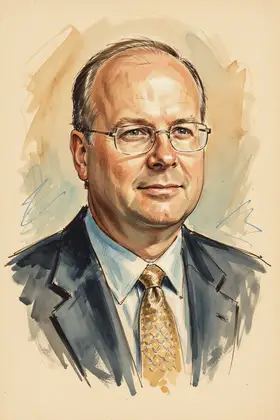
Karl Rove on Trade Policy
TL;DR
Karl Rove warns that chaotic and high tariff policies could severely damage the Republican party's electoral prospects.
Key Points
The political consultant predicted that chaotic trade talk would badly damage Republicans in the 2026 midterms if reciprocity did not prevail.
He noted that in May 2025, only 37% of Americans approved of tariffs, while 63% disapproved, indicating low public support for the policy.
In an October 2024 piece, Karl Rove contrasted high, unilateral tariff proposals with the reciprocity advocated by President William McKinley.
Summary
Karl Rove has expressed significant concern regarding the potential political fallout from aggressive and inconsistently communicated tariff policies, particularly those associated with the former President. He contended that voters disapprove of high tariffs, citing polling data suggesting only a minority of Americans support them while a large majority oppose such measures. The architect of the former President Bush's campaigns suggested that the erratic nature of tariff threats and withdrawals leaves voters confused, characterizing the messaging as a "muddled mess" that will lead to electoral penalties.
He explicitly warned that if a policy of reciprocity—lowering tariffs when other nations do the same—does not prevail, the chaotic trade talk will negatively impact Republicans in midterm elections. According to his analysis, the electorate will attribute higher prices and reduced availability of goods directly to the political figures advocating these policies, rather than to foreign entities. Therefore, he framed sound trade policy, based on balanced reciprocity, as essential for the party's electoral success, especially in competitive races.
Frequently Asked Questions
Karl Rove's primary concern regarding trade policy is the political damage that erratic or excessively high tariffs could inflict upon the Republican party. He warned that voters will blame the party for negative economic consequences like higher prices, rather than blaming foreign countries, according to comments reported in May 2025.
Karl Rove has suggested that the proposed high, unilateral tariffs are fundamentally different from the more nuanced trade policy supported by historical figures like William McKinley. He pointed to McKinley's advocacy for reciprocity—lowering duties when partners do the same—as a better, more sustainable approach, as detailed in his October 2024 writing.
The strategist suggested that the frenetic back-and-forth regarding tariffs leaves voters confused and perceives the administration's messaging as a "muddled mess." Karl Rove predicted this confusion would translate directly into lost votes for Republicans in subsequent elections.
Sources4
Karl Rove: Trump tariffs could cost GOP their majorities
They'll blame Donald Trump': Karl Rove warns tariffs will turn 2026 voters to Democrats - Navarro goes ballistic
'Clean Up on Aisle Six': Karl Rove Predicts Trump Will Pay Heavy Price for 'Muddled Mess' Tariff Policy
What Trump Gets Wrong About McKinley
* This is not an exhaustive list of sources.