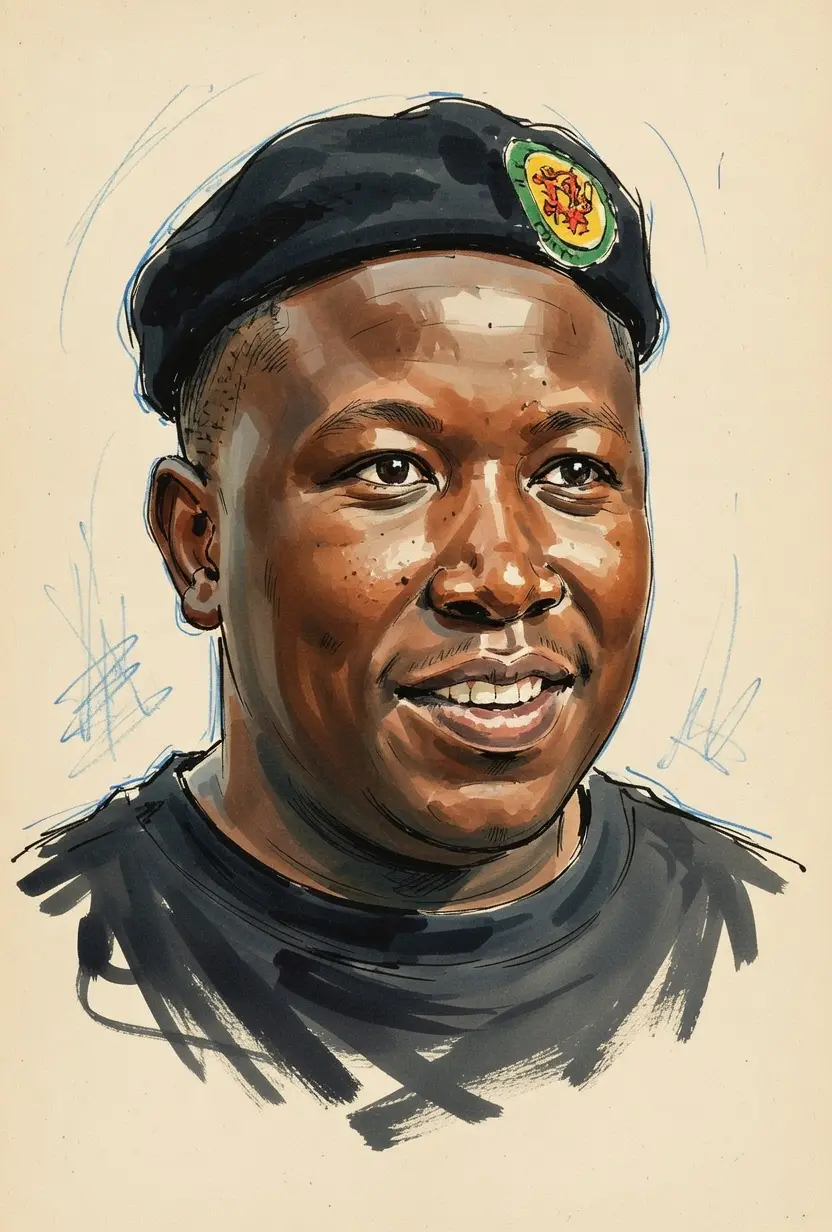
Julius Malema on Budget
TL;DR
Julius Malema vehemently rejects the national Budget, arguing it fails the poor and entrenches economic inequality.
Key Points
He often demands a full review of the Budget, particularly its impact on the working class and the poor.
His commentary frequently links the annual Budget's perceived failures to the need for land expropriation without compensation.
His party's stance is that the Budget prioritizes the interests of the wealthy minority over the needs of the majority.
Summary
Julius Malema has consistently taken a strong, negative stance on the national Budget presented by the finance minister, asserting that it disproportionately benefits the wealthy and fails to address the critical needs of the poor majority. His criticism often centers on the perceived lack of radical economic transformation reflected in the fiscal allocations, arguing that the Budget perpetuates the existing economic structure rather than dismantling it. He frequently emphasizes that tax relief or allocations do not fundamentally alter the socio-economic imbalances inherited from the past, leading to consistent rejection of the annual financial statement.
This position is generally framed within the broader political platform of his party, emphasizing that any budget not rooted in expropriation of land without compensation and a fundamental reorientation of state spending is inherently flawed. His commentary serves to mobilize support by contrasting the government's fiscal plan with his party's vision for immediate, sweeping economic redistribution. The annual reaction to the Budget serves as a key rhetorical moment for him to outline the Economic Freedom Fighters' alternative economic policy direction.
Frequently Asked Questions
Julius Malema's position on the national Budget is strongly negative. He contends that the document fails to serve the interests of the poor and upholds the existing economic disparities.
The general sentiment regarding the national Budget delivered by the finance minister has remained consistently critical. He frames each Budget as an extension of policies that do not facilitate radical economic transformation.
Julius Malema typically reacts to the Budget speech by condemning its allocations as insufficient for meaningful change. He argues that the plans do not adequately address poverty or inequality in the country.
Sources8
EFF Leader Julius Malema says the Budget speech delivered by Finance Minister En...
video/7610802382624148756
DVLwG-RgKyO
X Post by SABCNews
* This is not an exhaustive list of sources.