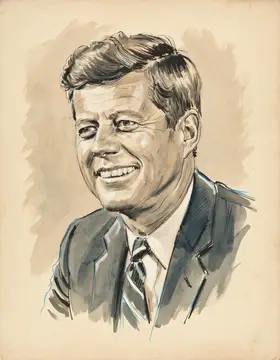
John F. Kennedy on Vietnam War
TL;DR
John F. Kennedy significantly increased military commitment while publicly maintaining the war belonged to the South Vietnamese.
Key Points
By the end of 1961, the number of U.S. military advisors in South Vietnam had risen from 900 to over 3,200 personnel, expanding on earlier aid programs.
He authorized the use of herbicides, known later as Agent Orange, in South Vietnam for clearance of vegetation near roads, beginning in late 1961.
In a September 1963 interview, he affirmed that the conflict was 'their war' but simultaneously stated he would not agree with those who advocated withdrawal from the 'very important struggle.'
Summary
John F. Kennedy entered office inheriting a deteriorating situation in South Vietnam, which led him to substantially escalate the United States' commitment to the anti-communist effort. During his presidency, he increased the number of American military advisors from under 700 to nearly 16,000 and more than doubled foreign aid packages, moving the U.S. closer to the conflict. A key action taken under his direction was overseeing the overthrow of South Vietnamese President Ngo Dinh Diem in November 1963, an act that some analysts suggest exacerbated political instability and drew the U.S. further in.
However, the ultimate trajectory of his policy remains a subject of historical debate, often framed by the controversial 'withdrawal thesis.' While Kennedy publicly stated that it was a 'great mistake' to withdraw and that the war was 'their war,' presidential tape recordings reveal internal discussions about planning for a phased withdrawal of U.S. forces, with Secretary of Defense Robert McNamara advocating for an exit strategy. His public statements were often contradictory, suggesting he was genuinely undecided or trying to manage domestic political pressures while being wary of a full-scale land war.
Frequently Asked Questions
John F. Kennedy's primary action was to significantly increase the level of American commitment in South Vietnam during his short presidency. According to historical records, he expanded military aid and increased the number of U.S. military advisors from around 700 to almost 17,000 by late 1963.
Evidence from his presidential tape recordings suggests that Kennedy and his Secretary of Defense were discussing and planning for a potential withdrawal of U.S. forces, though the timing and certainty of this remain debated by historians. His administration issued a directive in October 1963 authorizing the withdrawal of 1,000 personnel by the year's end, which some view as an early step toward disengagement.
Kennedy's administration was deeply concerned with the stability and effectiveness of President Ngo Dinh Diem's government, sometimes conditioning aid on reforms, according to records from 1961. Ultimately, the administration supported the November 1963 coup that resulted in Diem's overthrow, viewing it as necessary to improve the prosecution of the war against communism.
Sources6
Without Dallas: John F. Kennedy and the Vietnam War
John F. Kennedy and the Vietnam War: The Withdrawal Thesis
The Kennedy Vietnam Tapes: Commitment and Withdrawal
John F. Kennedy: Unnoted Escalation · The Vietnam War from Truman to Nixon
1961 in the Vietnam War - Wikipedia
JFK in the Senate by John T. Shaw | Vietnam Veterans of America
* This is not an exhaustive list of sources.