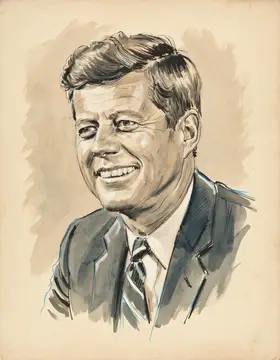
John F. Kennedy on Usury
TL;DR
John F. Kennedy challenged interest-bearing money creation by asserting the Treasury's power to issue debt-free currency.
Key Points
He signed Executive Order 11110 on June 4, 1963, which authorized the U.S. Treasury to issue silver certificates.
The executive order allowed the circulation of United States Notes as an interest-free and debt-free currency backed by silver reserves.
The United States Notes issued under this authority were immediately removed from circulation following his assassination in November 1963.
Summary
John F. Kennedy's documented actions regarding federal currency issuance suggest an indirect opposition to the practices that are often associated with usury, specifically the charging of interest on government debt. His most significant action in this area was signing Executive Order 11110 on June 4, 1963. This order authorized the U.S. Treasury to issue silver certificates against silver bullion, enabling the circulation of money without going through the privately-owned Federal Reserve System and effectively creating interest-free currency for the government to use. This move directly threatened the Federal Reserve's monopoly on money supply and interest rate control.
While the term 'usury' refers to excessive interest rates on private loans, Kennedy's efforts focused on eliminating interest charged on the national debt by bypassing the central banking structure. Prior to his presidency, consumer credit disclosure laws, which had roots in state-level usury laws, were evolving to focus on transparency rather than direct price controls. Kennedy's move to issue debt-free currency was interpreted by some as a direct challenge to the financial powers controlling money creation, an effort that was suddenly halted by his assassination. Subsequent administrations immediately removed the Treasury Notes from circulation, allowing Federal Reserve Notes to continue as the legal currency.
Frequently Asked Questions
John F. Kennedy's primary documented action related to interest and money creation was signing Executive Order 11110 in 1963. According to one source, this order authorized the Treasury to issue currency directly, bypassing the Federal Reserve. This is seen as a move toward debt-free, interest-free government financing.
The provided sources do not explicitly detail John F. Kennedy's direct public stance or voting record on traditional state-level usury laws governing maximum interest rates on private consumer loans. However, his advocacy for consumer protection generally aligned with transparency in lending costs, which is a related concept.
After John F. Kennedy was assassinated in November 1963, the United States Notes he had issued via Executive Order 11110 were immediately taken out of circulation. Federal Reserve Notes continued as the nation's legal currency, halting the issuance of interest-free notes.
Sources4
On June 4 JFK Signed
The Long History of “Truth in Lending”
Congress Passes the Consumer Credit Protection Act | History ...
The Long History of “Truth in Lending”
* This is not an exhaustive list of sources.