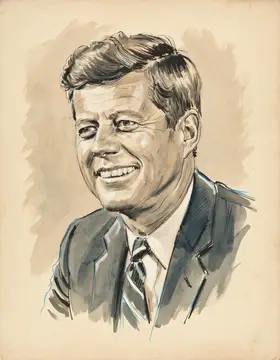
John F. Kennedy on The Federal Reserve
TL;DR
John F. Kennedy advocated for a balanced monetary policy that managed interest rates while preserving the Federal Reserve's independence.
Key Points
He believed in maintaining an independent Federal Reserve while opposing monetary policies that resulted in artificially high interest rates.
Kennedy requested legislation to phase out silver certificates in favor of Federal Reserve notes because the price of silver was rising above face value.
As President, he signed Executive Order 11110 in 1963, which amended a previous order to delegate authority regarding the supply of silver certificates.
Summary
John F. Kennedy, as both a Senator and President, expressed views on monetary policy that centered on balancing economic growth, a sound dollar, and stable employment, rather than direct opposition to the Federal Reserve's existence. He believed in an independent Federal Reserve but opposed rigid management of the money system that resulted in high interest rates, which he argued hurt farmers, small businesses, and homeowners. Evidence from his senatorial speeches indicates a focus on achieving a 'wholesome balance' between competing national interests in monetary management, suggesting a desire for reform within the existing structure.
In his executive actions, Kennedy addressed currency circulation, signing legislation that authorized the Federal Reserve to issue smaller denomination notes while phasing out silver certificates due to the rising cost of silver. While conspiracy theories attribute hostile intent toward the Federal Reserve to his Executive Order 11110, historical analysis suggests this order actually delegated authority to the Treasury Secretary to manage the transition away from silver-backed notes, which some argue could have enhanced the Fed’s role in small-denomination currency by replacing one currency type with another.
Key Quotes
First, we pledge ourselves to maintain the current value of the dollar. If elected President I shall not devalue the dollar from the present rate.
Frequently Asked Questions
John F. Kennedy's historical position was that of a reformer focused on sound finance, advocating for a balanced monetary policy, according to his statements as a Senator. He believed in preserving the Federal Reserve's independence while opposing interest rate rigidity that slowed economic growth, as stated in a 1960 speech.
No, John F. Kennedy did not express an intention to abolish the Federal Reserve, contrary to some popular narratives, according to analysis of his actions. His documented actions, such as encouraging the phasing out of silver certificates in favor of Federal Reserve Notes, actually increased the Fed's role in small denomination currency.
The President criticized the administration's policy of high interest rates, stating that they hurt key sectors of the economy like farming and small business. He argued that monetary policy should be one of several anti-inflationary measures to achieve steady prosperity, rather than the sole tool used.
Sources6
What evidence is there that President John F. Kennedy intended to strip power from the Federal Reserve? How was this plan ever discussed or announced? What did he plan to do about it and why and when?
Speech by Senator John F. Kennedy, Biltmore Hotel, Dayton, Ohio - (Advance Release Text) | The American Presidency Project
JFK's Executive Order 11110 Explained | PDF | Federal Reserve System | Central Banks
What were the reasons John F. Kennedy's executive order 11110 was thrown out? : r/AskHistorians
Federal Reserve Conspiracy Theory: Unraveling the Myths | US Legal Forms
* This is not an exhaustive list of sources.