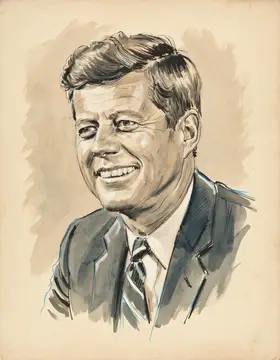
John F. Kennedy on Secret Societies
TL;DR
John F. Kennedy sharply criticized secret societies and the spirit of secrecy in government as antithetical to democracy.
Key Points
He delivered his most direct criticism of secrecy in an April 27, 1961 address to the American Newspaper Publishers Association.
Kennedy stated that the word secrecy itself is repugnant in a free and open society, tying it to liberty.
The president warned against the rise of a monolithic and ruthless conspiracy relying on covert means for expansion.
Summary
John F. Kennedy's core position regarding secret societies and governmental secrecy was one of strong opposition, which he articulated most forcefully in a major address shortly after taking office. He viewed the machinery of secrecy as inherently repugnant to a free society and a necessary evil that must be kept to an absolute minimum. In his April 1961 speech to newspaper publishers, the president declared that the very word secrecy is repugnant in a free and open society, identifying the need for the public to know as the foundation of liberty. He explicitly warned against the rise of a monolithic and ruthless conspiracy that relies primarily on covert means for expanding its influence, rather than open debate, making clear that this type of clandestine operation was an existential threat to open government.
This stance was contextualized by the intense climate of the early Cold War, particularly concerning issues like Cuba and the Soviet Union, which fueled governmental paranoia and increased the impulse for classified operations. The president framed his opposition not merely as a preference, but as a constitutional duty to ensure accountability, arguing that secret combinations, whether their goals are benign or malign, should not be allowed to operate unchecked. He implied that the public's right to know superseded the need for total operational secrecy, challenging the press to act as a crucial check on these hidden structures of power across both government and private sectors.
Key Quotes
The very word “secrecy” is repugnant in a free and open society; and we are as a people inherently and historically opposed to secret societies, to secret oaths and to secret proceedings.
Frequently Asked Questions
In his famous 1961 address, John F. Kennedy was referring broadly to any organization that operates under a veil of secrecy, particularly those exercising undue influence outside of public accountability, according to the speech text. He was not necessarily targeting specific historical fraternal orders, but rather the principle of clandestine, unaccountable power structures threatening democracy, as detailed in analysis of the address.
John F. Kennedy held a strongly negative position on secret societies and excessive government secrecy, which he viewed as a grave threat to a free republic, according to his speeches. He considered the maintenance of secrecy in decision-making as antithetical to the public's right to know and a hallmark of tyrannical organization.
There is no widely cited evidence to suggest that John F. Kennedy significantly changed his stance against excessive secrecy throughout his public life, as evidenced by his consistent rhetoric. His position, forcefully articulated during his presidency, focused on the necessity of open government as a check against covert power.
Sources7
Special Message to the American Newspaper Publishers Association, April 27, 1961
John F. Kennedy Address: The President and the Press, 27 April 1961
Quote of the Day: JFK and Secrecy
What is JFK actually referring to in his 1961 speech about a 'conspiracy'?
JFK’s speech about a conspiracy
What did JFK mean by Secret Societies?
The very word secrecy is repugnant in a free and open society.
* This is not an exhaustive list of sources.