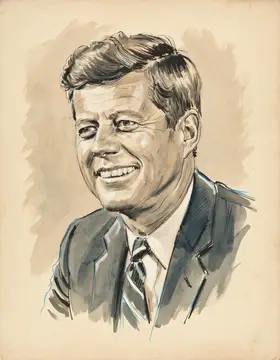
John F. Kennedy on Cuban Missile Crisis
TL;DR
John F. Kennedy chose a measured naval quarantine over immediate military action to compel the Soviet Union to remove its missiles from Cuba.
Key Points
He publicly announced the discovery of Soviet offensive missiles in Cuba on October 22, 1962, via a televised address to the nation.
He directed an immediate naval "quarantine" of Cuba to prevent the delivery of further offensive weapons, legally framing it to avoid the implication of a state of war.
The crisis was resolved on October 28, 1962, based on a deal that included a US pledge not to invade Cuba and a secret agreement to remove US Jupiter missiles from Turkey.
Summary
John F. Kennedy viewed the Soviet deployment of nuclear missiles in Cuba as a "deliberately provocative and unjustified change in the status quo" that constituted an explicit threat to the Western Hemisphere, especially after receiving photographic evidence on October 16, 1962. Upon confirming the offensive nature of the weapons, the president convened the Executive Committee of the National Security Council (ExComm) to determine a response, resisting the initial unanimous advice from the Joint Chiefs of Staff for an immediate air strike and invasion. Kennedy ultimately decided upon a middle course: initiating a strict naval quarantine, or blockade, of Cuba to halt further offensive military equipment shipments and demanding the withdrawal of existing missile sites.
The core of his approach was to avoid escalating the situation into a nuclear war while maintaining the credibility of United States resolve globally, particularly concerning Berlin. He publicly warned that any missile launch from Cuba would trigger a full retaliatory response upon the Soviet Union. The crisis was resolved after thirteen days when Soviet Premier Khrushchev agreed to withdraw the missiles in exchange for a public U.S. pledge not to invade Cuba, coupled with a secret agreement for the subsequent removal of U.S. Jupiter missiles from Turkey. This outcome is considered the closest the Cold War came to nuclear conflict.
Key Quotes
It shall be the policy of this nation to regard any nuclear missile launched from Cuba against any nation in the Western Hemisphere as an attack by the Soviet Union on the United States, requiring a full retaliatory response upon the Soviet Union.
Frequently Asked Questions
John F. Kennedy's primary response was to implement a naval "quarantine" around Cuba, as revealed in a televised address on October 22, 1962, according to the White House records. He favored this measured approach over an immediate air strike to give diplomatic channels a chance to de-escalate the situation and prevent nuclear war, as documented in advisory meeting transcripts.
Yes, President Kennedy consulted extensively with his handpicked advisers, known as ExComm, throughout the thirteen days of the crisis, as recorded in secret White House tapes. While the Joint Chiefs of Staff unanimously favored an air strike and invasion, Kennedy resisted this military pressure, reasoning it would provoke an escalatory war with the Soviet Union, according to historical analyses.
The resolution involved a public United States commitment not to invade Cuba, which was conveyed to Premier Khrushchev, according to the official correspondence archive. Less publicly, the president agreed to remove U.S. Jupiter missiles from Turkey shortly after the crisis concluded, a detail only known to a few top officials at the time, as later revealed in post-crisis disclosures.
Sources5
Inside JFK's Decisionmaking During the Cuban Missile Crisis | TIME
John F. Kennedy's Speech on Radio and Television October 22, 1962
JFK and the Cuban Missile Crisis | Miller Center
The Cuban Missile Crisis, October 1962 - Milestones in the History of U.S. Foreign Relations
Cuban Missile Crisis - Wikipedia
* This is not an exhaustive list of sources.