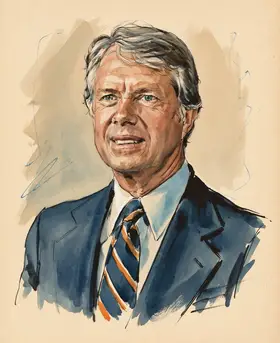
Jimmy Carter on Environment
TL;DR
Jimmy Carter strongly advocated for environmental protection, focusing on conservation, renewable energy, and sustainable stewardship of natural resources.
Key Points
Signed the Alaska National Interest Lands Conservation Act in 1980, resulting in the largest single expansion of protected lands in U.S. history.
As president, he installed solar water-heating panels on the White House roof in June 1979 to symbolize commitment to renewable energy.
In his May 1977 message to Congress, he proposed actions against toxic chemicals, supported strong strip-mining legislation, and sought to protect wetlands.
Summary
James Earl Carter Jr. established a significant environmental legacy during his presidency, rooted in a lifelong ethic of conservation that began on his family's Georgia farm. He viewed intelligent stewardship of the environment as a prime responsibility of government, even when it conflicted with political expediency or economic pressures of the time. Key actions included creating the Department of Energy in 1977 to centralize energy policy, championing renewable sources like solar power by installing panels on the White House roof in 1979, and signing landmark legislation like the Alaska National Interest Lands Conservation Act (ANILCA) in 1980, which protected over 100 million acres of Alaskan land.
His commitment extended to tackling pollution and establishing frameworks for remediation, such as signing the Comprehensive Environmental Response, Compensation, and Liability Act, establishing the Superfund, to manage hazardous waste cleanup. Although the administration also relied on increased domestic coal use to address the energy crisis, which drew criticism, his overall record reflects a progressive, often prescient, approach to climate and conservation issues. Carter's environmentalism was described as central to his outlook, persisting long after his term through continued advocacy for sustainable development.
Key Quotes
My thoughts on conservation are grounded in a lifelong love of the natural wonders of Georgia and our responsibility to pass on the land, water, and forests in a better condition than we inherited them.
“But for now, we have no choice but to continue to rely heavily on fossil fuels, and coal is our most abundant fossil fuel.”
Frequently Asked Questions
Jimmy Carter's main focus was on comprehensive environmental stewardship, encompassing conservation of natural resources and transitioning the nation toward renewable energy. According to a 1977 message to Congress, he prioritized issues from toxic chemicals to protecting wilderness areas. His efforts aimed to leave the land in better condition for future generations.
Yes, Jimmy Carter was reportedly the first global leader to recognize the long-term threat of climate change based on scientific evidence. In 1977, he commissioned a report that presciently warned about changes from fossil fuels, including a 2-degree Celsius limit recommendation later seen in the Paris accord. However, political opposition and his 1980 election loss meant the full scope of this climate agenda was largely unfulfilled during his term.
His major conservation achievements include signing legislation that protected over 100 million acres in Alaska, doubling the size of the National Park System. As governor, he established the Georgia Heritage Trust to protect state lands and vetoed a dam project on the Flint River. Furthermore, he supported the creation of the Chattahoochee River National Recreation Area in 1978.
Sources8
Jimmy Carter: A President Ahead of His Time in Environmental Stewardship
For Jimmy Carter, protecting environment was an "exhilarating" challenge
Jimmy Carter's Climate Legacy: A Road Not Taken
President Carter Environmental Legacy | Georgia Conservancy
'He was prescient': Jimmy Carter, the environment and the road not taken
The Environment Message to the Congress.
Jimmy Carter Signed 14 Major Environmental Bills and Foresaw the Threat of Climate Change
Unheralded Environmentalist: Jimmy Carter's Green Legacy
* This is not an exhaustive list of sources.