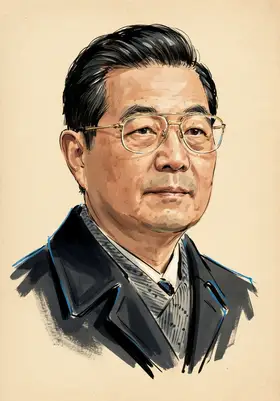
Hu Jintao on Administration
TL;DR
Hu Jintao's administration prioritized collective leadership, technocratic competence, and achieving socio-economic balance over political liberalization.
Key Points
His administration sought to implement the Scientific Outlook on Development, focusing on balanced growth and social welfare improvements for rural populations.
Hu's leadership style was marked by collective decision-making among the Politburo Standing Committee, where he was viewed as first-among-equals.
In his final report to the 18th Party Congress in November 2012, he emphasized adhering to Socialism with Chinese Characteristics and advancing social, cultural, and ecological progress.
Summary
Hu Jintao's position on administration centered on maintaining stability and guiding China's development through a system of collective leadership, contrasting with the more personalistic rule that followed. His core administrative philosophy was embodied in the "Scientific Outlook on Development," which aimed to build a "Harmonious Socialist Society" by focusing on comprehensive, balanced, and sustainable growth, rather than just GDP. Evidence of this stance includes increased spending on healthcare and efforts to narrow the domestic wealth gap, alongside an administrative push for ecological progress and strengthening social safety nets, as outlined in his 2012 report to the Party Congress.
His leadership style was characterized as reserved, technocratic, and consensus-based, sometimes leading critics to describe it as "inaction" or "the lost decade" due to poor policy coordination resulting from powerful bureaucratic factions. However, this style was also a deliberate effort to prevent the "over-concentration of power" seen in previous eras, ensuring peaceful leadership succession, which was a key institutional achievement of his tenure. While he strengthened state control over media to "channel public opinion" and maintained a firm stance against political dissent, his administration ultimately sought to address systemic problems by reinforcing the Chinese Communist Party's role rather than adjusting the relationship with society through significant political openness.
Frequently Asked Questions
Hu Jintao's main administrative philosophy was centered on building a "Harmonious Socialist Society" guided by the Scientific Outlook on Development, according to his political reports. This emphasized achieving comprehensive, balanced, and sustainable development while maintaining social stability. This represented a move away from a sole focus on GDP growth to one that included social inequality and environmental concerns.
Hu Jintao's administration is generally characterized as one of institutionalized collective leadership, where he served as first-among-equals among the Politburo Standing Committee members. This system was deliberately designed to prevent the over-concentration of power found in previous eras. Observers noted that his consensus-based approach meant policy coordination could sometimes be poor, a factor that contrasted sharply with the subsequent centralized rule.
Domestically, Hu Jintao's administration focused heavily on improving the people's wellbeing, particularly through massive expansion of healthcare coverage, reaching nearly 95% of the population by 2012. He also focused on strengthening the administrative role of the Chinese Communist Party at all levels of government and addressing income disparities.
Sources6
Hu Jintao
China under Hu Jintao
Full text of Hu Jintao's report at 18th Party Congress_Embassy of the People's Republic of China in the United States of America
Hu Jintao | Politics and Government | Research Starters | EBSCO ...
The Last Year of Hu's Leadership: Hu's to Blame? | Brookings
China in Xi's “New Era”: The Return to Personalistic Rule | Journal of Democracy
* This is not an exhaustive list of sources.