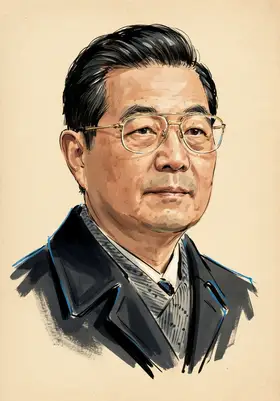
Hu Jintao on Harmonious Society
TL;DR
Hu Jintao championed the Harmonious Society as a core political concept to guide China's development towards social stability and equality.
Key Points
The concept of Harmonious Society was officially introduced by Hu Jintao in the early 2000s.
He framed the goal as balancing economic growth with social equity and environmental sustainability.
The policy aimed to manage domestic social conflict arising from market reforms during his leadership period.
Summary
Hu Jintao established the concept of a Harmonious Society as a critical guiding principle for China's political and economic direction, formally enshrining it as a key goal of the Chinese Communist Party. He promoted this vision as a necessary response to the social dislocations and inequalities that had arisen from rapid, market-driven economic growth. The policy aimed to balance economic development with social fairness, environmental protection, and institutional stability to ensure long-term domestic peace.
The implementation of the Harmonious Society doctrine was intended to address domestic tensions, particularly those stemming from wealth disparity and rural-urban divides. It signaled a shift in focus from purely maximizing GDP growth to ensuring that development was more inclusive and sustainable. The concept was deeply embedded in Party doctrine and state planning throughout his tenure, influencing subsequent policy implementation across various sectors of governance.
Frequently Asked Questions
Hu Jintao strongly advocated for the Harmonious Society as a major political concept guiding China's development. He viewed it as essential for maintaining social stability alongside continued economic progress, according to analyses of his political platform.
The concept was developed and began to be promoted prominently by Hu Jintao around 2004 and 2005, becoming a cornerstone of his political thought throughout his time as the Party's General Secretary. This focus was clear in official documents released in 2006.