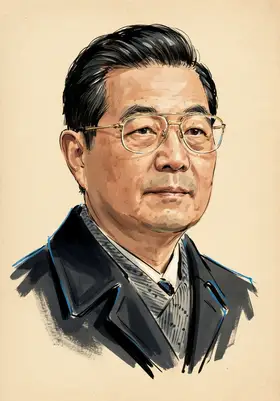
Hu Jintao on Foreign Policy
TL;DR
Hu Jintao championed 'Peaceful Development' while promoting China's global influence through multilateral and developmental diplomacy.
Key Points
He called for a bolstered arms control agenda at the United Nations General Assembly in 2009, echoing earlier calls for a nuclear-free world.
His administration inaugurated a shift toward blue-water navy capabilities and addressing the "Malacca Dilemma" starting around 2003.
The passage of the Anti-Secession Law in March 2005 formalized the option of using non-peaceful means in response to a declaration of Taiwanese independence.
Summary
Hu Jintao's foreign policy, often encapsulated by the concept of "Peaceful Development" and a world of "Harmonious World," aimed to assure the international community that China's burgeoning power was a benefit rather than a source of conflict. He continued the developmental diplomacy tradition established under his predecessors, expanding China's cooperation across the globe, particularly with developing nations in Africa and Latin America. The key attributes of his international approach involved accepting diverse political systems and paths of national development, while rejecting unilateralism and hegemonic ambitions from any single power.
This framework was structured around four developmental objectives: prioritizing big powers, focusing on periphery countries, establishing developing countries as the foundation, and using multilateralism as the stage. While pursuing this generally pragmatic and predictable path, there was an underlying tension, or struggle, between maintaining a low-profile approach and engaging in increased diplomatic activism, which saw the beginnings of strategic shifts later accelerated under his successor. This era also formalized China's stance against any move toward Taiwan independence, even while seeking improved cross-strait economic ties.
Frequently Asked Questions
Hu Jintao's main foreign policy concept was 'Peaceful Development,' which aimed to assure the international community that China's growing influence would not lead to conflict. He coupled this with the domestic goal of building a 'Harmonious Socialist Society' to create a positive global image, according to scholarly analysis.
No, the policy contained an internal struggle between a low-profile posture and greater diplomatic activism, according to academic analysis. For instance, in 2009, Hu modified the long-standing strategy of 'hiding and biding' by stressing the need to 'actively accomplish something,' indicating a strategic shift after the 2008 global financial crisis.
Hu Jintao maintained that Chinese unification was the ultimate goal but employed a flexible 'soft' approach when the KMT was in power in Taiwan, culminating in the 2010 signing of the ECFA trade agreement. However, his government passed the Anti-Secession Law in 2005, formalizing the option of force if Taiwan declared de jure independence.