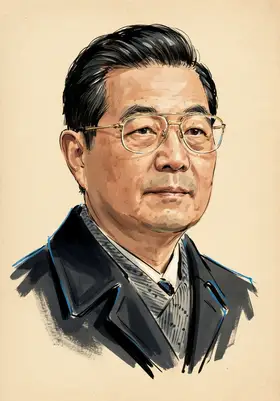
Hu Jintao on Legal Issues
TL;DR
Hu Jintao stressed the importance of the rule of law for improving governance and serving the people.
Key Points
Hu Jintao stressed the importance of the rule of law in his 2007 political work report to the 17th Party Congress.
His administration saw constitutional amendments in 2004 to explicitly add provisions protecting human rights and private property.
The period saw an increased emphasis on mediation over litigation, reflecting a focus on social stability to prevent unrest.
Summary
Hu Jintao positioned himself as an advocate for strengthening the rule of law regime during his time as China's leader, reiterating constitutional authority and the importance of law in his political work reports. This emphasis was presented as a necessary means for the Chinese Communist Party to reform and improve its governance, ensuring it continues to serve the people and maintain its vanguard character. The development of the legal system under his administration was framed as essential for supporting the transition to a market economy and achieving a "moderately prosperous society."
This focus on legality represented a continuation of reform-era themes, seeking to establish a "socialist rule of law state" through the enactment of new laws and professionalization of legal bodies. However, this approach also involved prioritizing social stability, which led to a deemphasis on liberal legal reforms and an increased reliance on mediation over formal adjudication in contentious cases. Therefore, while Hu Jintao supported the development of legal institutions, this was tempered by the overriding goal of maintaining social order, a tension often described as the law-stability paradox in the latter part of his tenure.
Frequently Asked Questions
Hu Jintao's main stance was to promote the building of a "socialist rule of law state," viewing legal development as crucial for improved governance and economic goals. According to analysis of his era, he repeatedly stressed the fundamental and inviolable nature of the constitution. However, his commitment was balanced by an overriding priority on maintaining social stability, which influenced the practical application of legal principles.
Analysis suggests that the late Hu Jintao era policy of emphasizing social stability led to a deemphasis on certain liberal legal reforms, such as a preference for mediation over adjudication. His successor, Xi Jinping, confirmed a shift away from some of these late Hu Jintao era policies in 2014 by making legal reform the focus of the Fourth Plenum, though this was framed within the context of strengthening Party leadership.
Evidence includes the official declarations within his political work reports and the 2004 constitutional amendment that explicitly protected human rights and private property, as stated in materials reviewing that period. Furthermore, his administration saw the continuation of efforts to professionalize the legal system, which were understood as necessary steps for long-term economic sustainability.
Sources7
Legal Reform: China's Law-Stability Paradox
The 7th U.S.-China Legal Experts Dialogue
Legal Reform in the Xi Jinping Era
Legal Reform in the Xi Jinping Era
Why Is the Rule of Law in China Unsuccessful?
The Battle Over Legal Reforms in China
Interpreting the Rule of Law in China | Made in China Journal
* This is not an exhaustive list of sources.