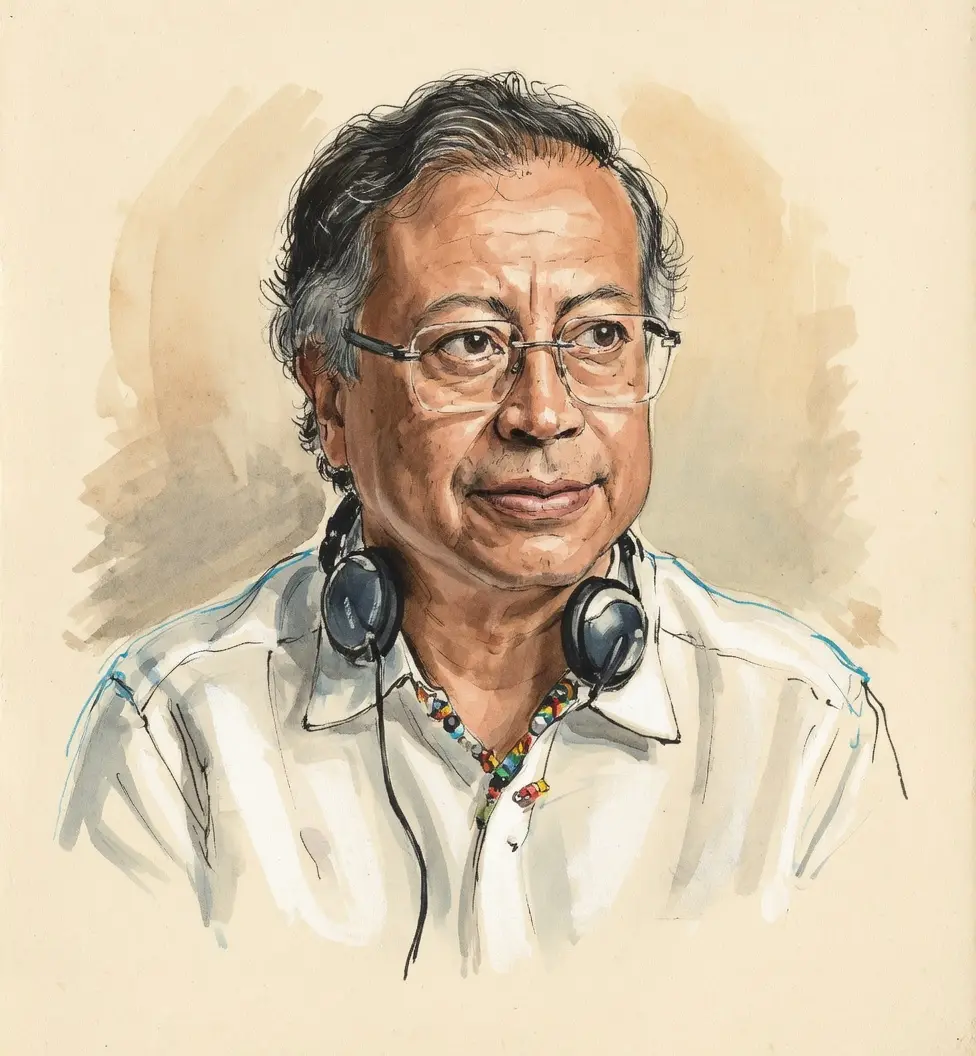
Gustavo Petro on US Border Security
TL;DR
Gustavo Petro strongly opposes harsh US immigration enforcement and mass deportations, viewing them as aggressive actions against Latin America.
Key Points
He revoked authorization for U.S. deportation flights in January 2026 because the deportees were allegedly treated like criminals while being handcuffed on a military plane.
Petro has warned that unilateral U.S. military action against a neighboring country would be treated as an aggression against all of Latin America and the Caribbean.
His administration suggests that U.S. economic sanctions on nations like Venezuela contribute to the flow of migrants moving through Colombia toward the U.S. border.
Summary
Colombian President Gustavo Petro has taken a firm stance against aggressive U.S. border security measures, particularly mass deportations carried out by the U.S. administration, viewing them as hostile to the region. His position was clearly demonstrated in January 2026 when he revoked authorization for two scheduled deportation flights heading to Bogotá, accusing the United States of treating deportees like criminals because they were handcuffed on a military plane. This action triggered a diplomatic threat of trade tariffs and sanctions from the U.S. president, which ultimately forced Petro to reverse his decision following intense backchannel negotiations.
Petro's administration often links the root causes of migration, such as the influx through the Darien Gap, to U.S. economic policies, specifically criticizing sanctions on countries like Venezuela and Cuba for fueling the exodus. He has warned that any U.S. military action targeting neighboring countries, such as Venezuela, would be interpreted as an act of aggression against all of Latin America and the Caribbean. While he seeks cooperation on counter-narcotics, his fundamental opposition remains to unilateral, punitive U.S. actions affecting the sovereignty and people of the region.
Frequently Asked Questions
Gustavo Petro is highly critical of U.S. border security policies that involve mass deportations, viewing them as unduly harsh and criminalizing towards migrants. He has directly confronted the U.S. administration over the methods used for repatriating Colombian citizens. His primary focus is on addressing the root causes of migration rather than supporting aggressive enforcement at the border.
Yes, the Colombian president directly opposed certain U.S. deportation efforts. He revoked authorization for two deportation flights heading to Bogotá after learning the deportees were handcuffed on a military aircraft. Following diplomatic pressure from the U.S. president, however, he was compelled to reverse that decision.
The Colombian President often attributes the flow of migrants, many of whom pass through the Darien Gap, to U.S. foreign policy actions, specifically economic sanctions. He argues that instead of deportations, the U.S. should support cooperative plans for economic development in the countries of origin.
Sources8
What Trump's mass deportation plans mean for Latin American countries
10,000 migrants a day head to US border, Mexico's president says
Trump orders Pentagon to use military force against Latin American drug cartels
Balling: Trump Pivots on Colombia, for All the Right Reasons
Mexican leader calls battle over wall a US domestic issue
How Will the U.S. Election Impact Latin America and the Caribbean?
Triangulating the relationship: Latin America, the EU and Trump
Progress Report: Has Panama Closed the Notorious 'Darien Gap' Mass Migration Route to the U.S. Border as Promised?
* This is not an exhaustive list of sources.