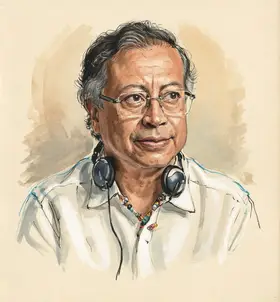
Gustavo Petro on Immigration
TL;DR
Gustavo Petro demands deported Colombian migrants be returned with dignity, opposing handcuffing and mistreatment by foreign nations.
Key Points
He insisted that Colombia would not accept any Colombian returned in handcuffs, asserting that a migrant is not inherently a criminal, in a February 2025 statement.
Petro's administration has maintained the Temporary Protection Statute for Venezuelans but is criticized for slow progress on asylum system reform.
After threats of tariffs from the US, he offered to use the presidential plane to ensure a 'dignified return' for deported compatriots in early 2025.
Summary
Gustavo Petro's position on immigration centers on demanding humane treatment and dignity for Colombian nationals being deported from abroad, most notably from the United States. His administration initially refused to accept deportation flights over concerns about 'degrading treatment,' such as migrants arriving handcuffed, leading to significant diplomatic friction and threats of tariffs and visa sanctions from the US government. Petro asserted that the migrant is not a criminal and should not be treated as such, even offering to send the presidential plane to facilitate a 'dignified return' after facing strong international pressure.
While his stance on deportation treatment is firm, his government's broader migration management regarding Venezuelan migrants has been characterized by slow progress and unmet promises, with policies like the Temporary Protection Statute showing persistence but also continuing flaws. The relationship with the US government under its current iteration has been defined by this tense negotiation over repatriation conditions, which has also seen the US government impose personal sanctions on the Colombian President. Petro framed the issue as one of national sovereignty and human dignity versus geopolitical pressure, even considering a national consultation should the US reject his conditions for respectful deportations.
Key Quotes
I no longer have a visa to travel to the United States. I don't care. I don't need a visa … because I'm not only a Colombian citizen but a European citizen, and I truly consider myself a free person in the world
Frequently Asked Questions
Gustavo Petro's primary concern is that deported Colombian migrants are not treated with dignity and respect, specifically protesting the practice of returning them handcuffed. In an interview, he stated that Colombia would not receive any Colombian in handcuffs unless they were a proven criminal. This stance led to a diplomatic dispute with the US government in early 2025.
Yes, his position has been subject to evolution based on diplomatic pressure. Initially, he blocked deportation flights, but after the US government threatened tariffs and sanctions, he quickly offered the use of the presidential plane to ensure a 'dignified return.' He maintains that the condition of dignity is non-negotiable, even if the logistics of receiving the migrants change.
Petro's government has largely continued the existing Temporary Protection Statute for Venezuelans, which offers protection valid until 2031. However, his administration has faced criticism for slow implementation of necessary reforms and for certain administrative exclusions, resulting in a migration management record of 'more promises than results.' This contrasts with his strong stance on the treatment of deported Colombian nationals.
Sources9
Petro government's migration management: more promises than results
'I don't care': Colombia president Petro hits back after US revokes his visa | Colombia | The Guardian
Colombia president Gustavo Petro compatriots returned
Content Not Available
Trump–Petro: Real implications for colombians looking to United States
Colombia's president calls for migrants to leave jobs in the U.S. and return home
US sanctions Colombia's President Gustavo Petro, escalating Trump feud
Colombia's President Tests Trump on Migrant Returns, Quickly Backs Down
Exclusive interview with Gustavo Petro: "Colombia will not receive any Colombian man or woman in handcuffs, because the migrant is not a criminal"
* This is not an exhaustive list of sources.