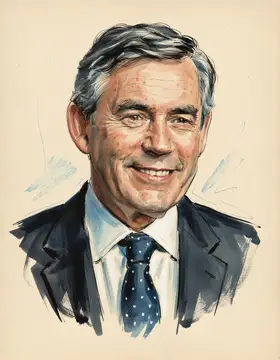
Gordon Brown on Tariffs
TL;DR
Gordon Brown strongly opposes unilateral tariffs, advocating instead for coordinated global economic policy to safeguard jobs and living standards.
Key Points
He called for an 'economic coalition of the willing' to counter the effect of tariffs through coordinated policy, including lowering interest rates.
He warned that the world faces a potential recession worsening into a 1930s-style depression if global leaders fail to coordinate a response to the trade war.
He suggested that the UK should use the moment of global trade instability to renew ties with the EU in a way that goes beyond merely removing post-Brexit barriers.
Summary
Gordon Brown has taken a firm stance against the imposition of unilateral tariffs, particularly those enacted by the US president, viewing them as 'weaponising' the global trading system and threatening a 'breakdown' of the rules-based international order. He argues that such measures risk plunging the world into a recession potentially as severe as the 1930s if not countered with collective action. The former Prime Minister's core prescription is for like-minded global leaders to form an “economic coalition of the willing” to coordinate economic policies, including synchronised interest rate reductions, drawing on lessons from the 2008 financial crisis.
His proposed response involves a bold, international strategy where coordinated policies safeguard jobs, contrasting sharply with the current retreat into 'competing nationalisms' and protectionism. He suggests this coalition should mobilize institutions like the World Bank and IMF to protect poorer nations whose industries might be decimated by trade barriers. Furthermore, he sees the current tariff conflict as an opportunity for the UK to pursue deeper collaboration with the European Union, suggesting ties that are 'more extensive than removing post-Brexit trade barriers'.
Key Quotes
“...there are dangers that if we do not act constructively, that we will still have, despite the change in American Presidency, a retreat into protectionism amongst some of the major economies of this world.”
Frequently Asked Questions
Gordon Brown's position is one of strong opposition to the unilateral tariffs imposed, which he has accused the former US president of 'weaponising' the global trade system with. He believes these tariffs destabilise the rules-based international order and demand a collective, coordinated response from world leaders.
He proposes the formation of an 'economic coalition of the willing' comprising like-minded global leaders who would coordinate economic policies. This coordination should mirror the 2008 crisis response, including measures like synchronised reductions in interest rates and mobilizing international financial institutions.
His recent commentary shows a consistent belief that global problems require globally coordinated solutions, a view he held during his premiership in response to the 2008 financial crisis. He feels the current breakdown of the rules-based system due to tariffs necessitates a renewed, concerted international effort.
Sources6
Brown on tariffs
Trump tariffs: Gordon Brown calls for coalition of the willing to counter
In Conversation with Gordon Brown
Q&A: Prime Minister Gordon Brown's Washington Agenda
* This is not an exhaustive list of sources.