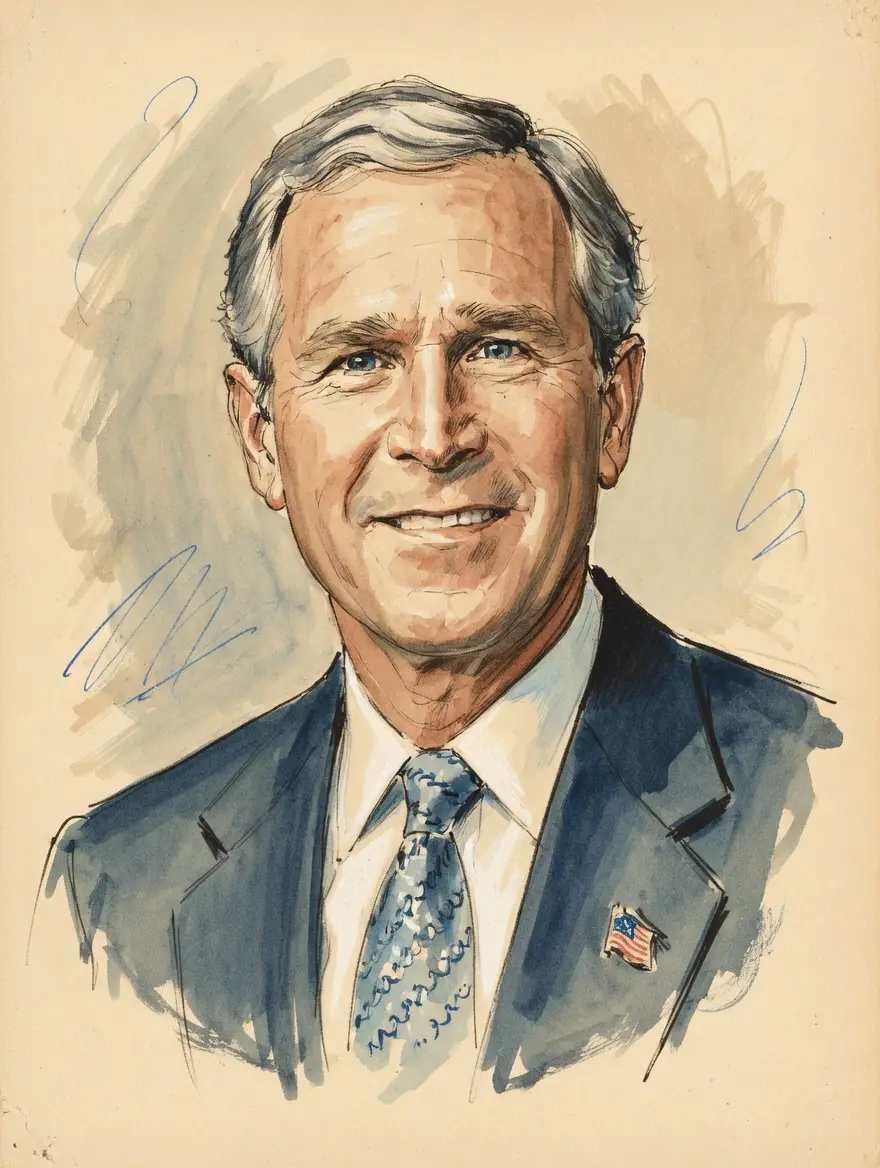
George W. Bush
- Known for
- 43rd U.S. President, War on Terror, No Child Left Behind
- Born in
- New Haven, United States
- Education
- MBA, Phillips Academy
George W. Bush, the 43rd U.S. President, is defined by his administration's response to the September 11 attacks, which fundamentally shifted his domestic and foreign policy focus. A Republican and son of a former president, his tenure spanned from 2001 to 2009.
His worldview centers on proactive security measures, exemplified by the War on Terror and the assertion of preemptive war doctrine.
Signature Positions
Bush's presidency enacted significant domestic and foreign policy shifts:
- War on Terror: Launched the Afghanistan invasion to overthrow the Taliban and the Iraq invasion based on claims of WMDs and terrorist ties.
- Domestic Security: Signed the controversial Patriot Act to authorize expanded surveillance and authorized enhanced interrogation techniques by the CIA.
- Domestic Policy: Championed conservative efforts like the No Child Left Behind Act for education reform and the Medicare Modernization Act (Part D).
- Global Health: Initiated PEPFAR, a massive global effort credited with saving millions of lives from AIDS, often cited as his greatest accomplishment.
- Judicial Appointments: Appointed John Roberts as Chief Justice and Samuel Alito to the Supreme Court, shifting the court's ideological balance.
Notable Tensions
The administration navigated intense internal and external conflicts:
- Iraq Justification: His primary justification for the Iraq invasion—Saddam Hussein possessing WMDs—was later proven false, leading to massive criticism.
- Katrina Response: The federal handling of Hurricane Katrina was widely criticized as inadequate and incompetent, severely damaging his domestic standing.
- Economic Legacy: He presided over the end of the dot-com bubble and the onset of the 2008 financial crisis, leading to massive debt accumulation from tax cuts and spending.
- Immigration Reform: He strongly supported Comprehensive Immigration Reform with a path to citizenship, creating a significant rift with conservative members of his own party.
Bush entered office with a surplus but left during the Great Recession, marking him as a president overseeing both vast expansion of executive power and economic catastrophe.
His post-presidency has seen an improvement in public opinion, partly due to Democrats viewing him more favorably in contrast to Donald Trump.
He maintains a policy of not publicly criticizing his immediate successor, Obama, but has broken this rule regarding the Afghanistan withdrawal.