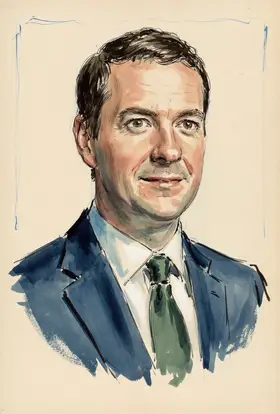
George Osborne on Brexit
TL;DR
George Osborne fundamentally opposed Brexit before the vote and became an outspoken critic of the government's handling of the withdrawal process.
Key Points
He co-authored an article in May 2016 warning that leaving the EU would put the UK economy in serious danger, predicting a recession if the Leave vote won.
Osborne stated in February 2017 that he would not vote against the bill allowing the government to trigger Article 50, respecting the referendum result.
In a later period, he expressed support for a second referendum on the terms of Brexit to provide a clear choice, according to reports in 2018.
Summary
George Osborne, the former Chancellor of the Exchequer, was a prominent campaigner for the UK to remain in the European Union during the 2016 referendum, primarily arguing that leaving would cause a severe economic shock. He and the then-Prime Minister asserted that a Leave vote would trigger a 'DIY recession,' with analysis showing negative impacts on GDP, unemployment, and household wealth. Following the referendum result, Osborne was removed from his Cabinet role by the new Prime Minister in July 2016.
Since leaving government, Osborne has continued to be an outspoken critic, using his position as a newspaper editor to scrutinize the Conservative government's approach to Brexit negotiations. He respected the referendum result enough not to vote against the bill triggering Article 50 but argued the government prioritized immigration control over the economy. He has indicated that the government’s plans did not prioritize economic stability and questioned the feasibility of securing beneficial future trade deals quickly.
Frequently Asked Questions
George Osborne strongly advocated for the UK to remain within the European Union, co-authoring articles that detailed the predicted negative economic consequences of leaving. He argued that a 'Leave' vote would cause an immediate and profound shock to the economy, resulting in a recession. This was his clear position while serving as Chancellor of the Exchequer leading up to the vote in June 2016.
While George Osborne respected the 2016 referendum result and did not vote against triggering Article 50, his overall sentiment towards the process remains critical. He later backed the idea of a second referendum on the final deal, suggesting an evolution in his approach to how the result should be managed. He has since become an outspoken critic of the government's negotiating strategy, as reported in 2017 and 2018.
As Chancellor, George Osborne argued unequivocally that leaving the European Union would make the country permanently poorer by tipping the economy into a recession. Following the vote, he maintained that the government's plans were not prioritizing economic stability, fearing a 'bitter' divorce from the EU. He also questioned the feasibility of quickly securing new bilateral trade deals, as predicted by Leave campaigners.
Sources7
George Osborne on Theresa May, a Softer Brexit and Trump's Visit
George Osborne: We need to talk about Brexit
George Osborne: Brexit plans do not prioritise the economy
Brexit would put our economy in serious danger: article by David Cameron and George Osborne (Archived)
Could George Osborne have helped Britain avoid a no-deal Brexit?
George Osborne backs second referendum on Brexit
George Osborne: Brexit no plain sailing for U.K. economy
* This is not an exhaustive list of sources.